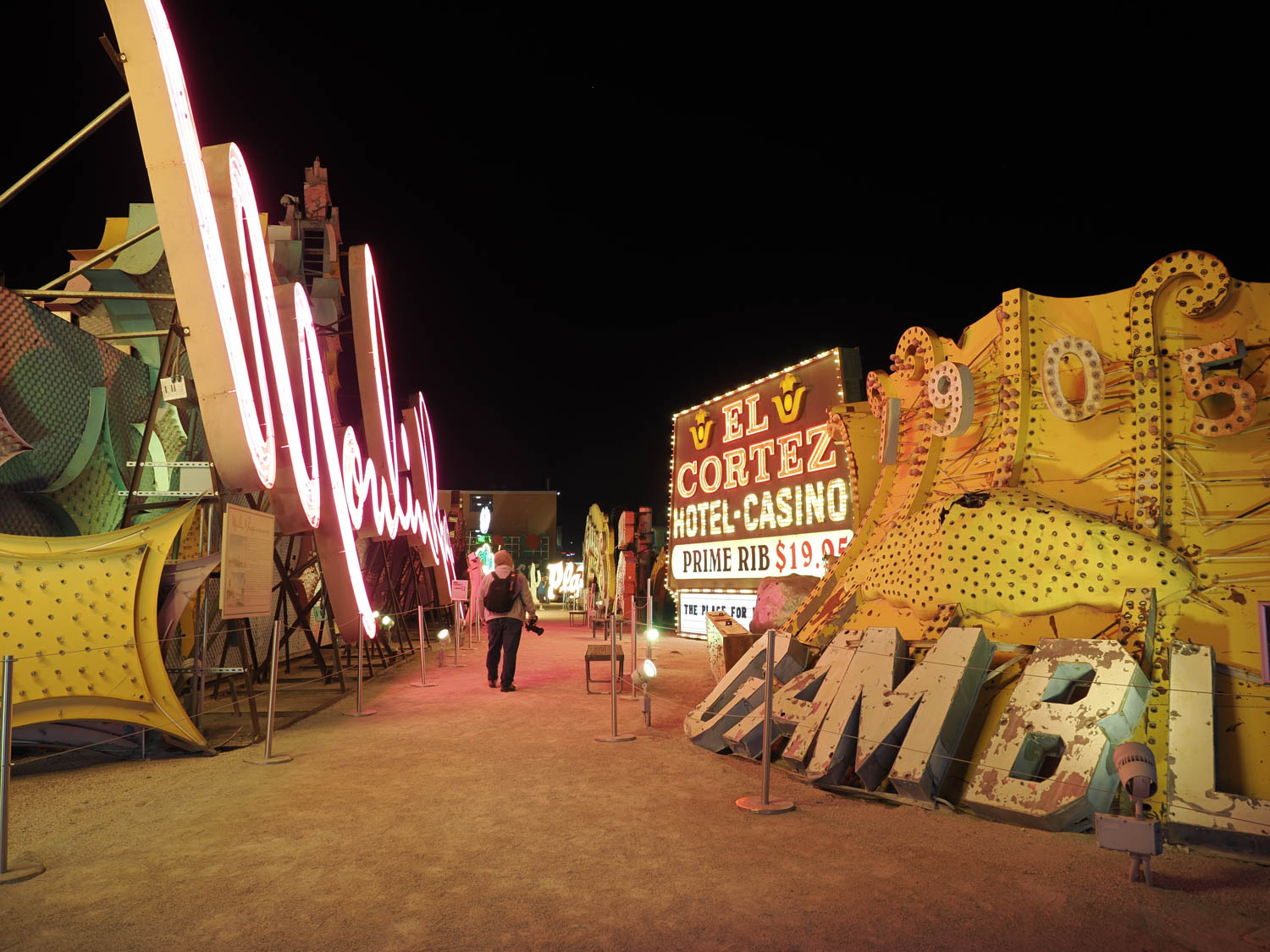
I recently met up with several photographers from the Shutter Up Vegas group organized on Meetup. It was a bit of a last-minute decision for me to join their early Sunday morning photowalk, but sometimes those spontaneous outings end up being the most rewarding.
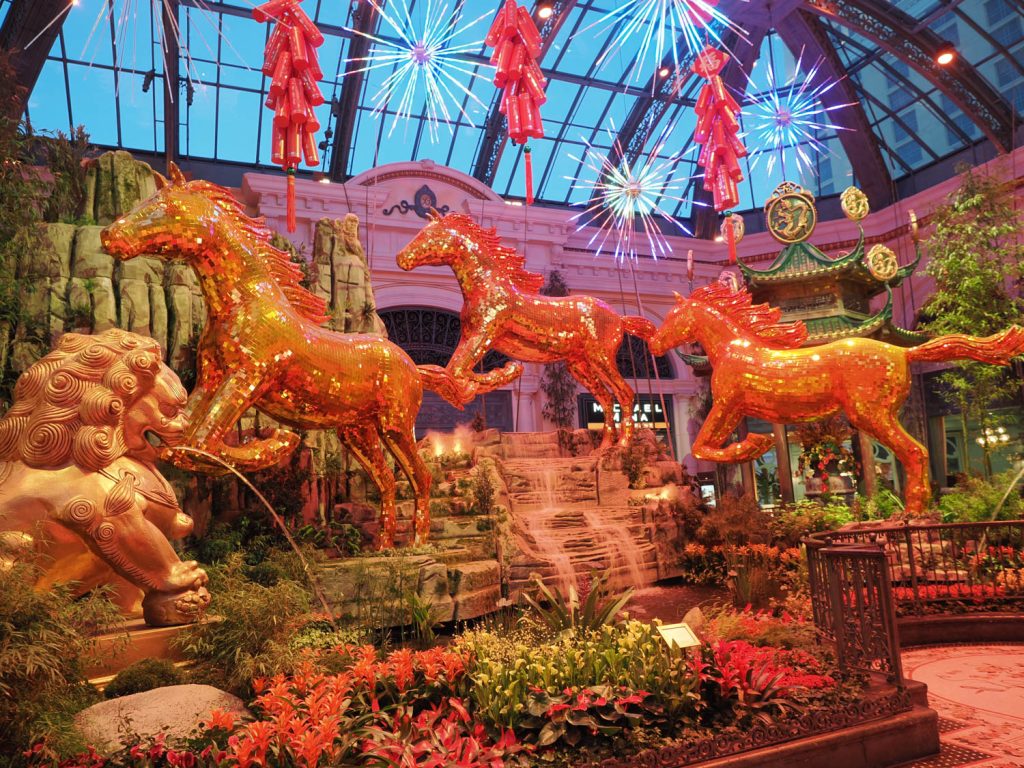
We gathered at the Bellagio parking lot just before sunrise. The city was still quiet as the first light crept over the Las Vegas skyline. After a few minutes photographing the sunrise, we made our way down into the Bellagio Conservatory & Gardens and eventually out onto the unusually calm and chilly streets of Las Vegas Boulevard.
As many of you know, my preferred style of photography leans heavily toward candid street photography—capturing people in authentic, unscripted moments. With the Strip nearly empty that morning, I found myself facing an unexpected creative block. Las Vegas without its crowds felt strangely still.
That day I had brought my OM System OM-3 (formerly Olympus) along with a single lens: the 12–40mm f/2.8, which is roughly a 24–80mm equivalent on full frame. My goal for the walk was simple—travel light and stay flexible.
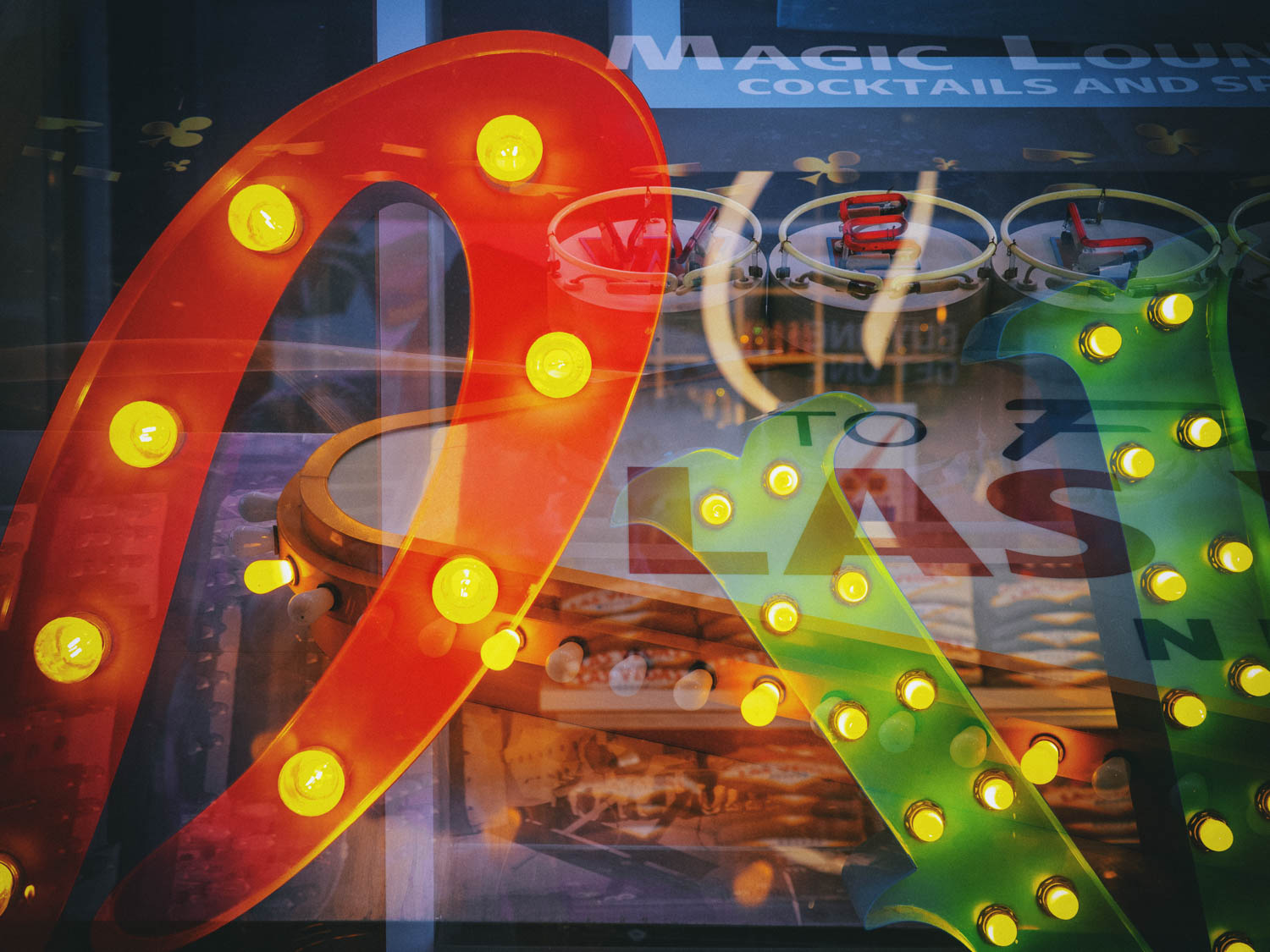
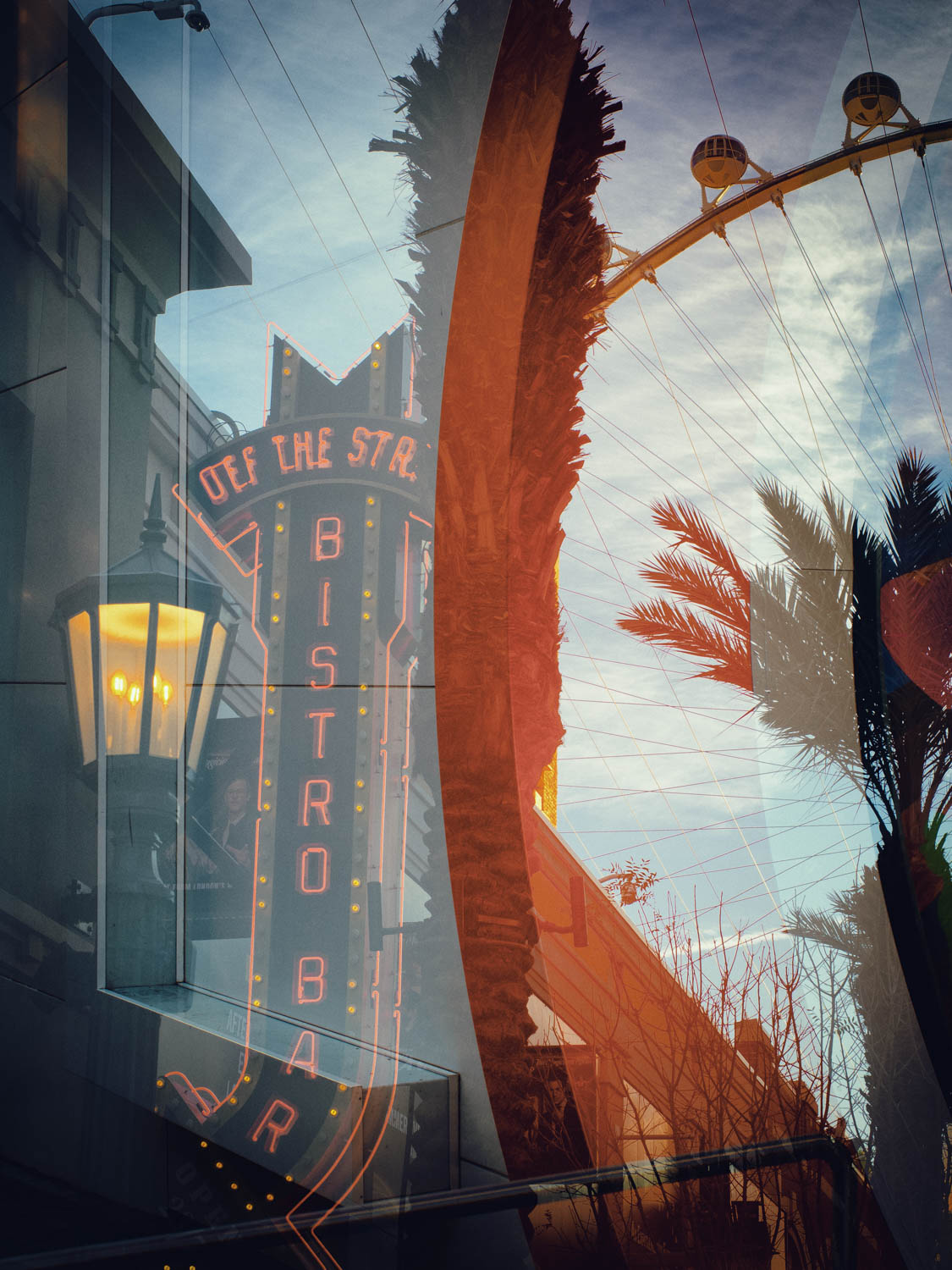
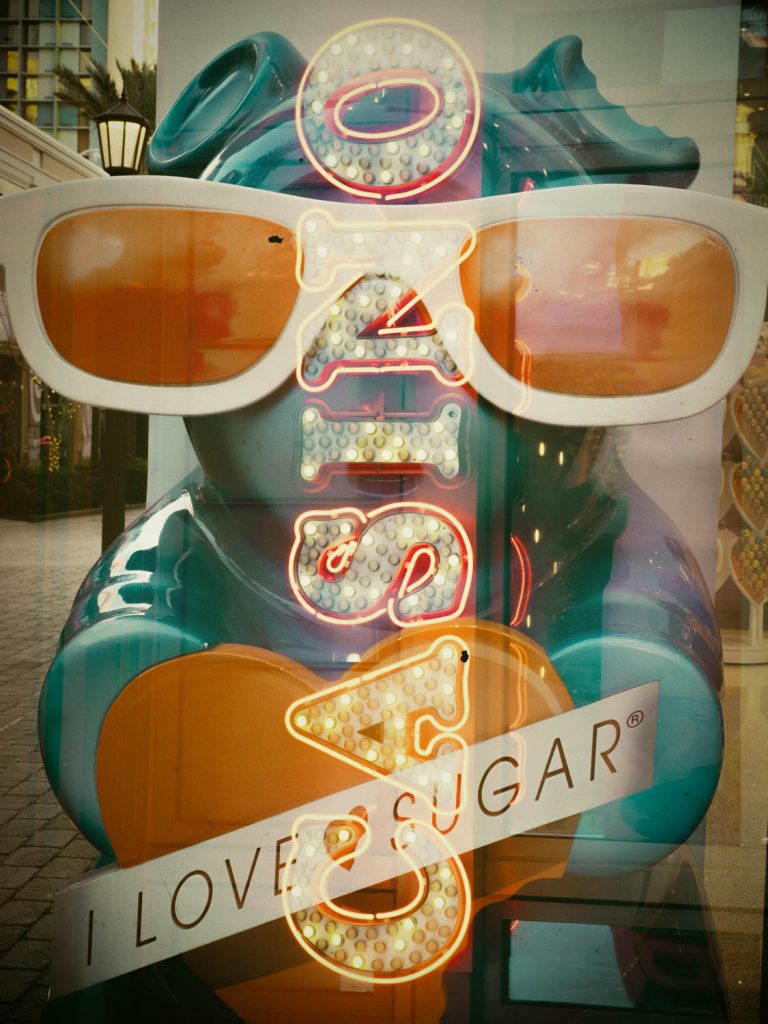
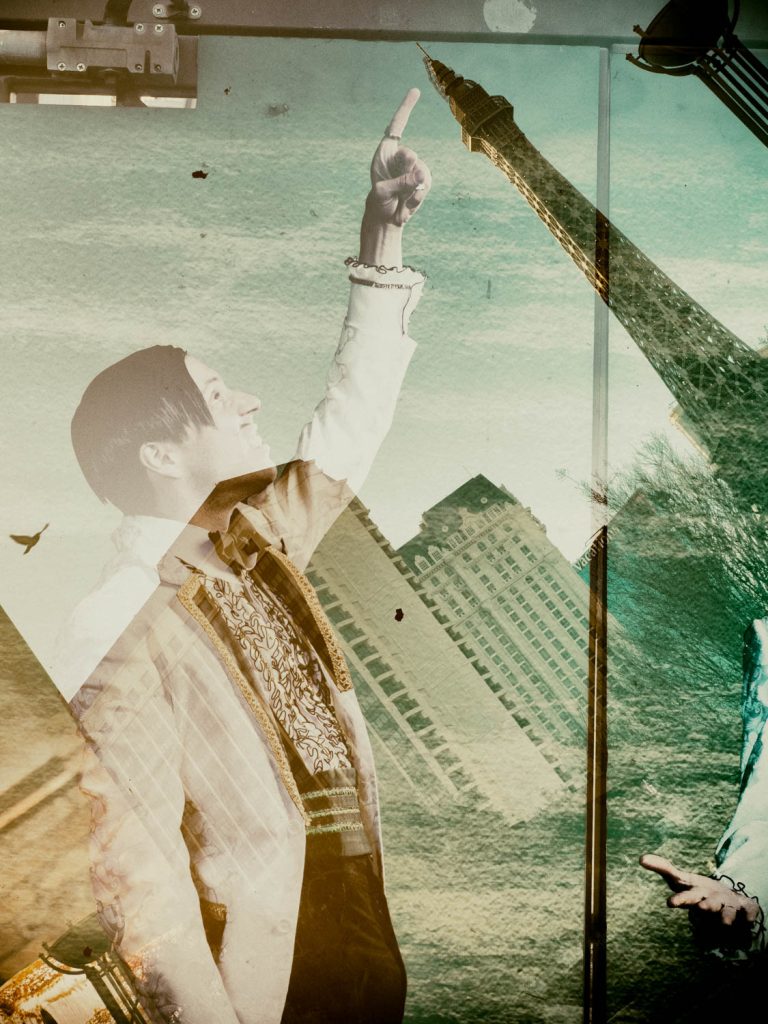
After taking a handful of fairly uninspiring shots, I decided to experiment. I remembered that the OM-3 had a built-in in-camera double exposure feature. Over the years I had seen some fascinating abstract double exposures created by other photographers. The images always intrigued me, though I had never tried the technique myself.
So I switched on the setting and started experimenting.
Technically, the process is fairly straightforward. You take the first image, and the camera overlays a faint ghost of that frame in the viewfinder so you can compose the second image to complete the exposure. In some ways, it’s easier than doing it on film, where you never quite know how the two images will overlap until the roll is developed.
The real challenge wasn’t the technical part—it was the creative one.
Once the first image is captured, you have to hold onto that visual idea while searching for a second image that complements it. That means thinking about textures, shapes, light, and movement all at once. Ideally the second image needs to be nearby; otherwise you could spend the rest of the photowalk wandering around trying to find the perfect match.
As we made our way toward the High Roller area, the environment became much more visually stimulating. Bright signage, decorative lighting, and bits of pop-art architecture began appearing everywhere. After a few attempts, I started to “see” in double exposures. What began as an experiment quickly turned into a fun creative challenge.
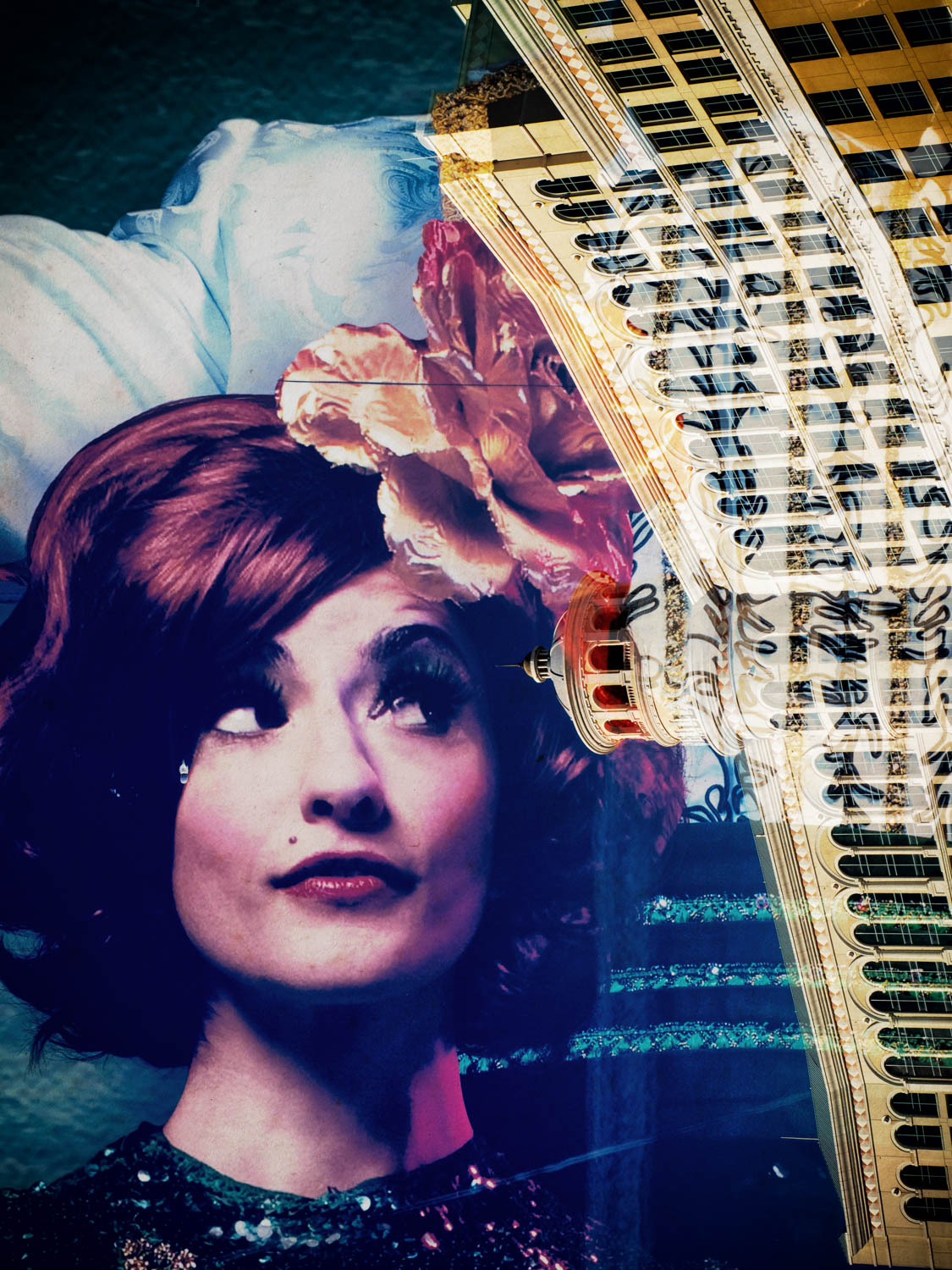
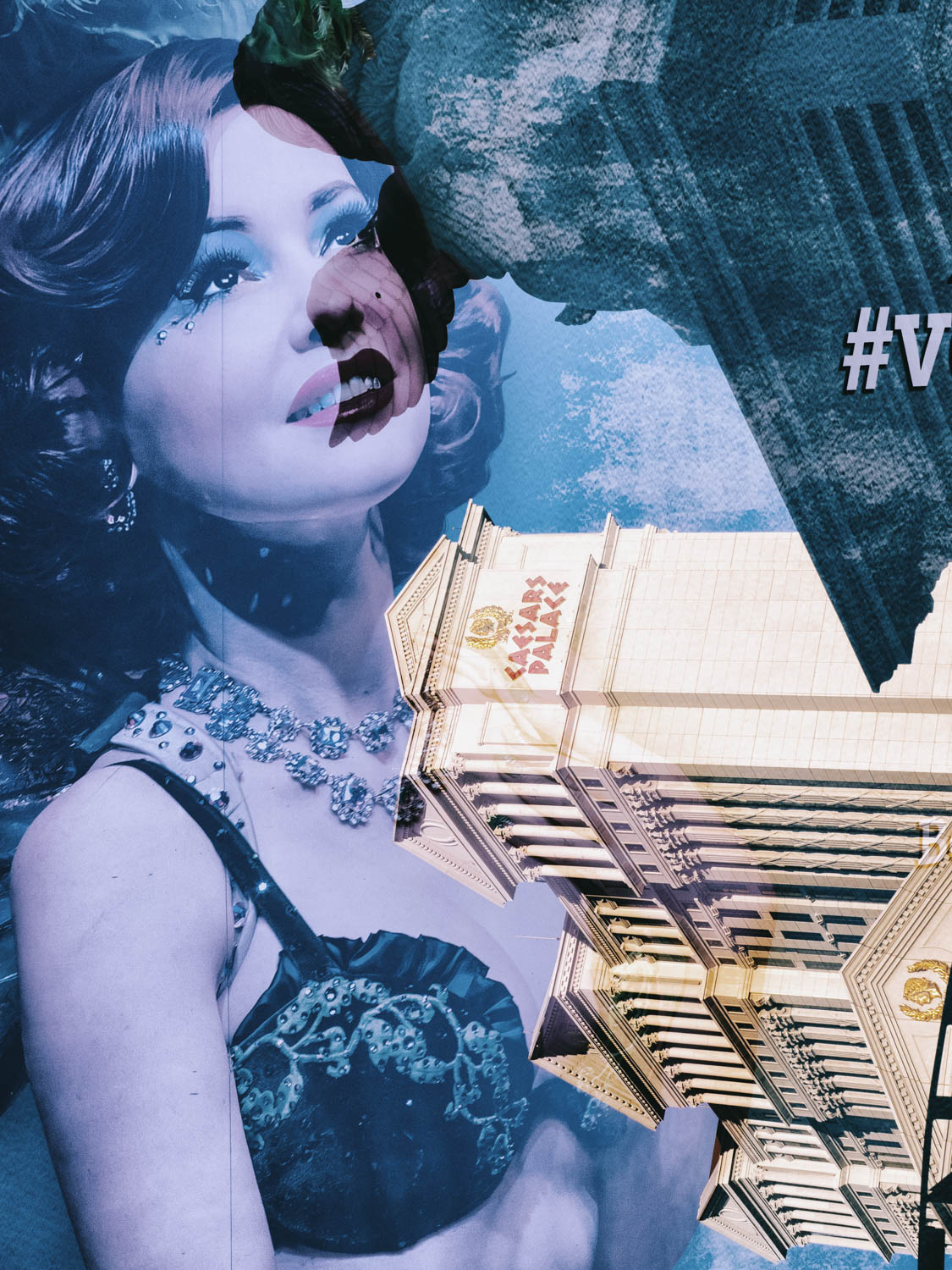
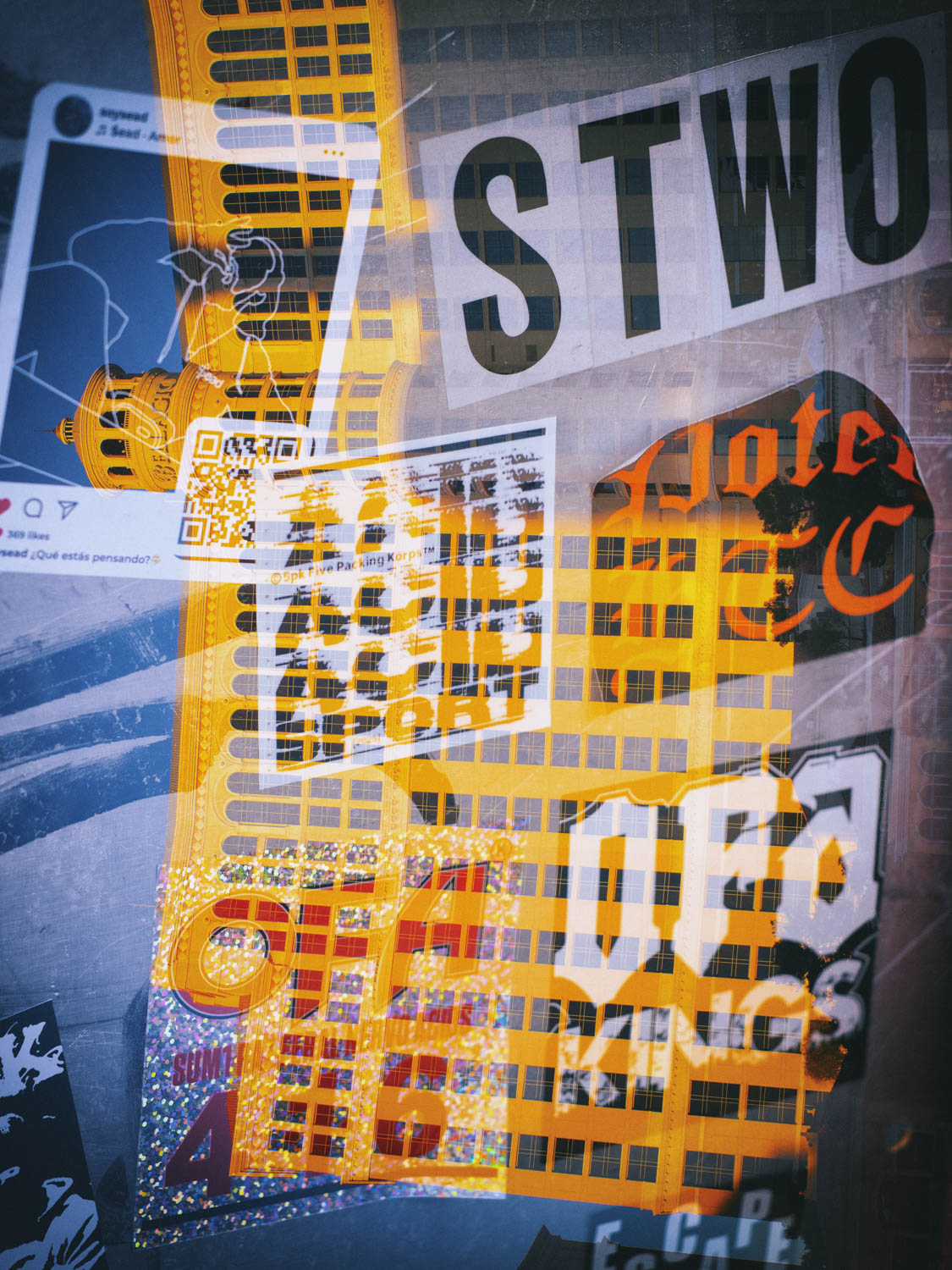

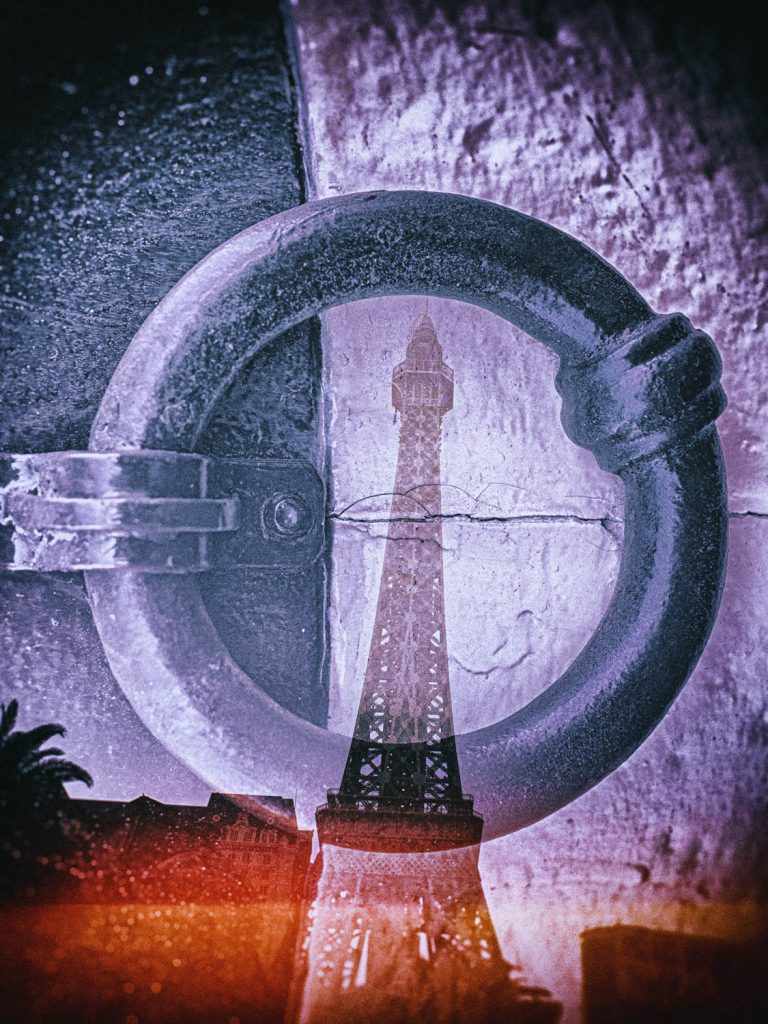
The Neon Museum
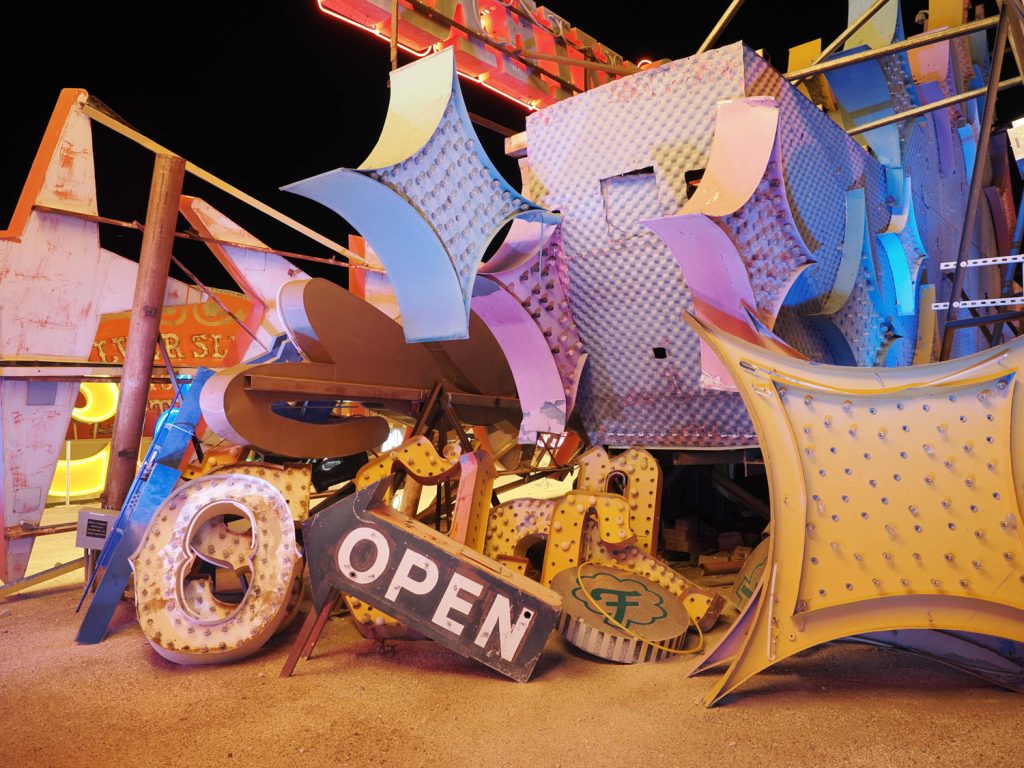
A few days later I joined another Meetup group, Desert Photo Explorers, for a night photowalk at the Las Vegas Neon Museum.
The Neon Museum—often called the “Neon Boneyard”—is dedicated to preserving the iconic signs that once defined the visual identity of Las Vegas. Founded in 1996, the museum collects and restores vintage neon signage from casinos, hotels, and businesses that shaped the city’s history. Walking through the outdoor exhibition is like stepping through a timeline of Las Vegas itself, with towering letters, glowing tubes, and weathered metal structures telling stories from decades past.
The museum occasionally hosts photographer-focused nights after normal operating hours, and this particular event started around 10 p.m. About fifteen to twenty photographers showed up, most carrying tripods and various lenses to capture the glowing relics of Vegas history.
I brought the same setup I had used during the earlier photowalk—my OM-3 and the 12–40mm lens—plus a tripod that I ended up not using.
As we stepped into the open yard, the massive neon signs lit up the night with a warm electric glow. Vintage typography, faded paint, and buzzing neon tubes created an incredible atmosphere. It was visually overwhelming in the best possible way.
But whenever I photograph a popular location like this, I always ask myself a simple question:
How can I create an image that no one else here is going to take?
The reality is that about 90% of the photos people take in places like this tend to look the same—images we’ve already seen countless times online. I wanted to try something different.
Remembering my earlier experiment, I turned the camera back to its double exposure mode.
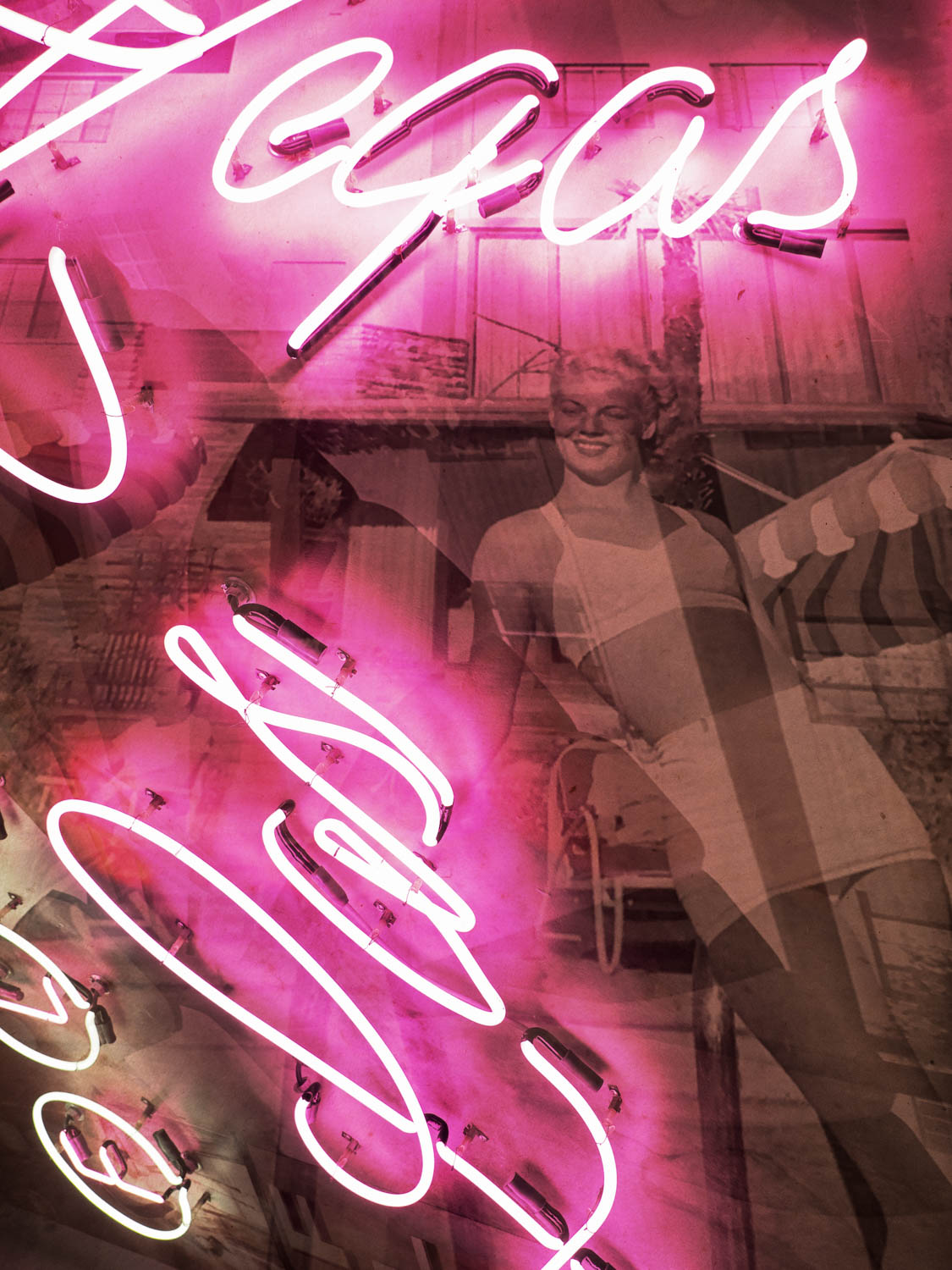
The neon lights, colors, and gritty textures of the old signs proved to be the perfect ingredients for abstract layering. The results were vibrant and unpredictable—colors overlapping to create bursts of electric reds, blues, and yellows.
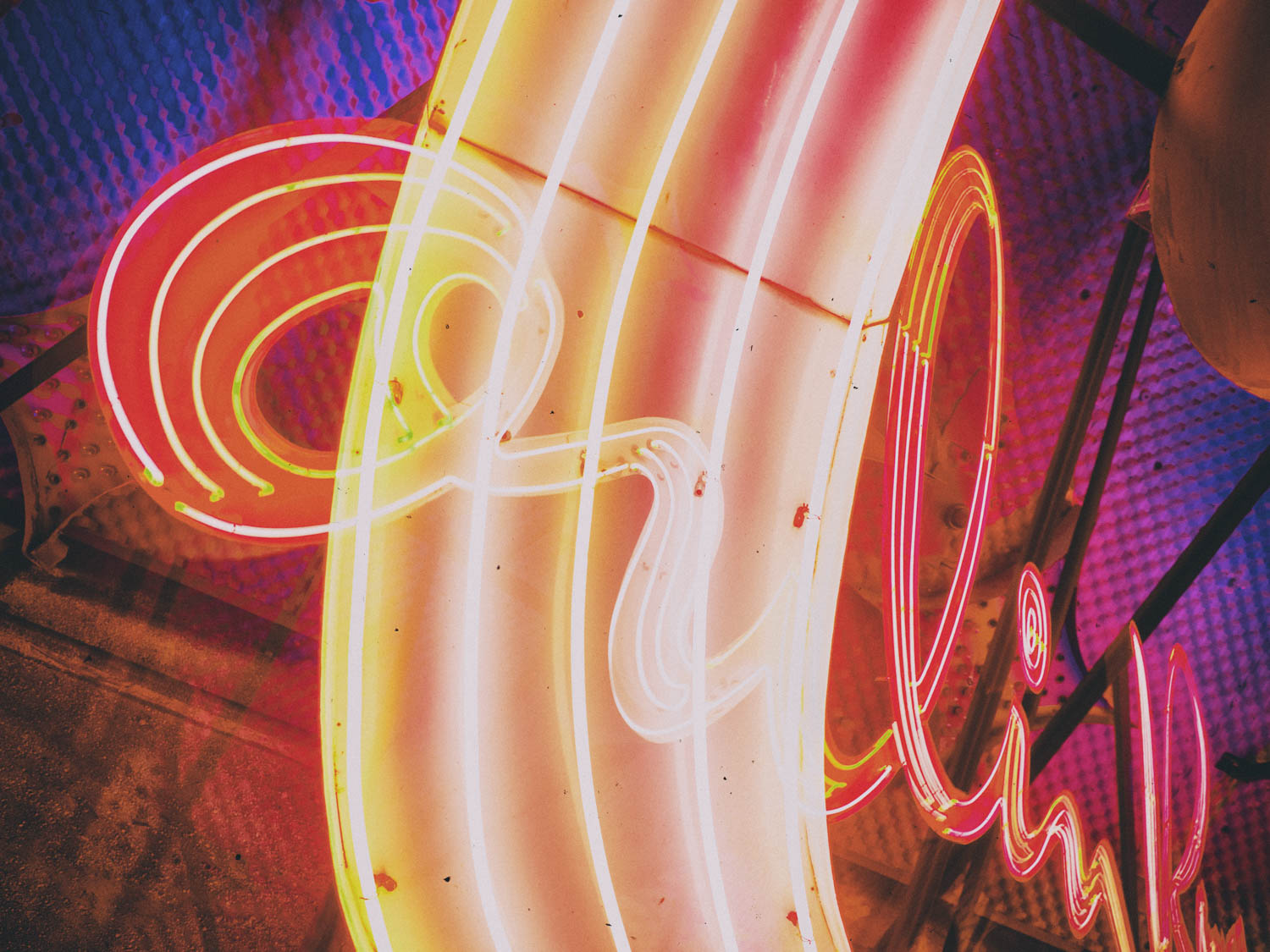

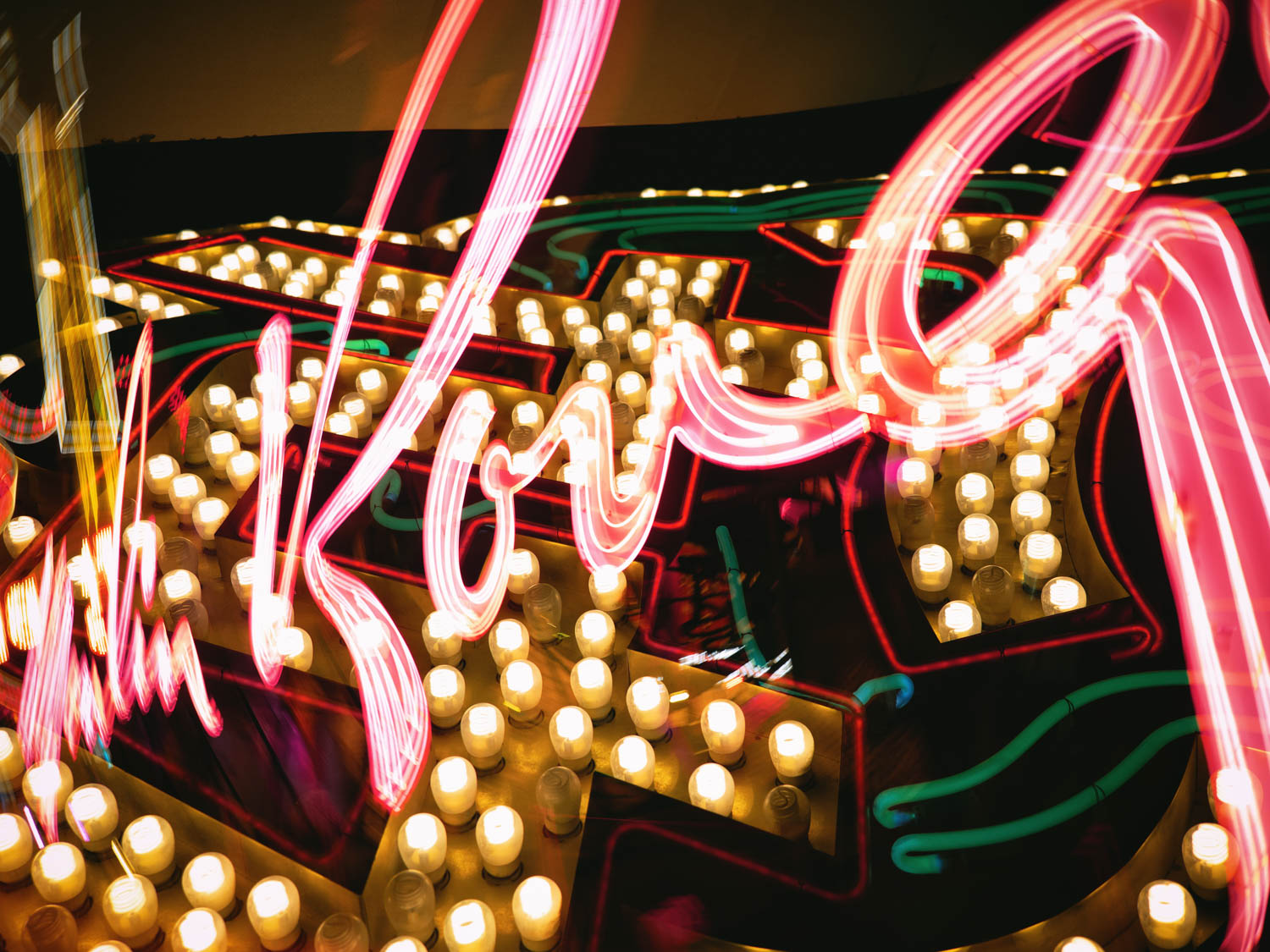
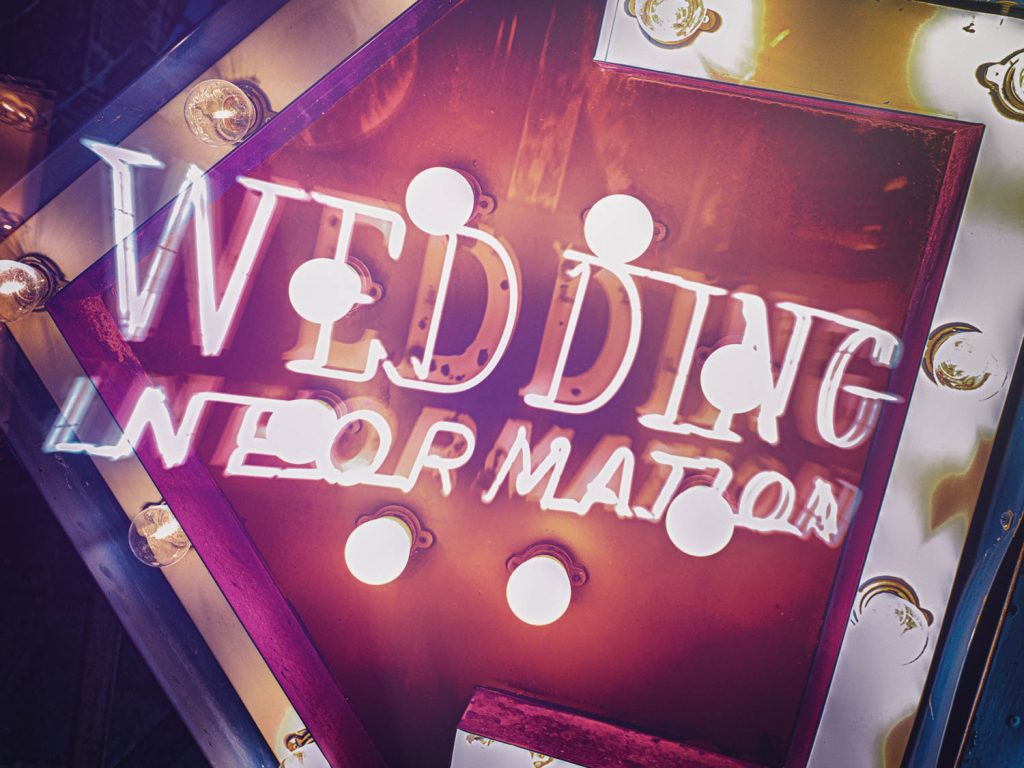
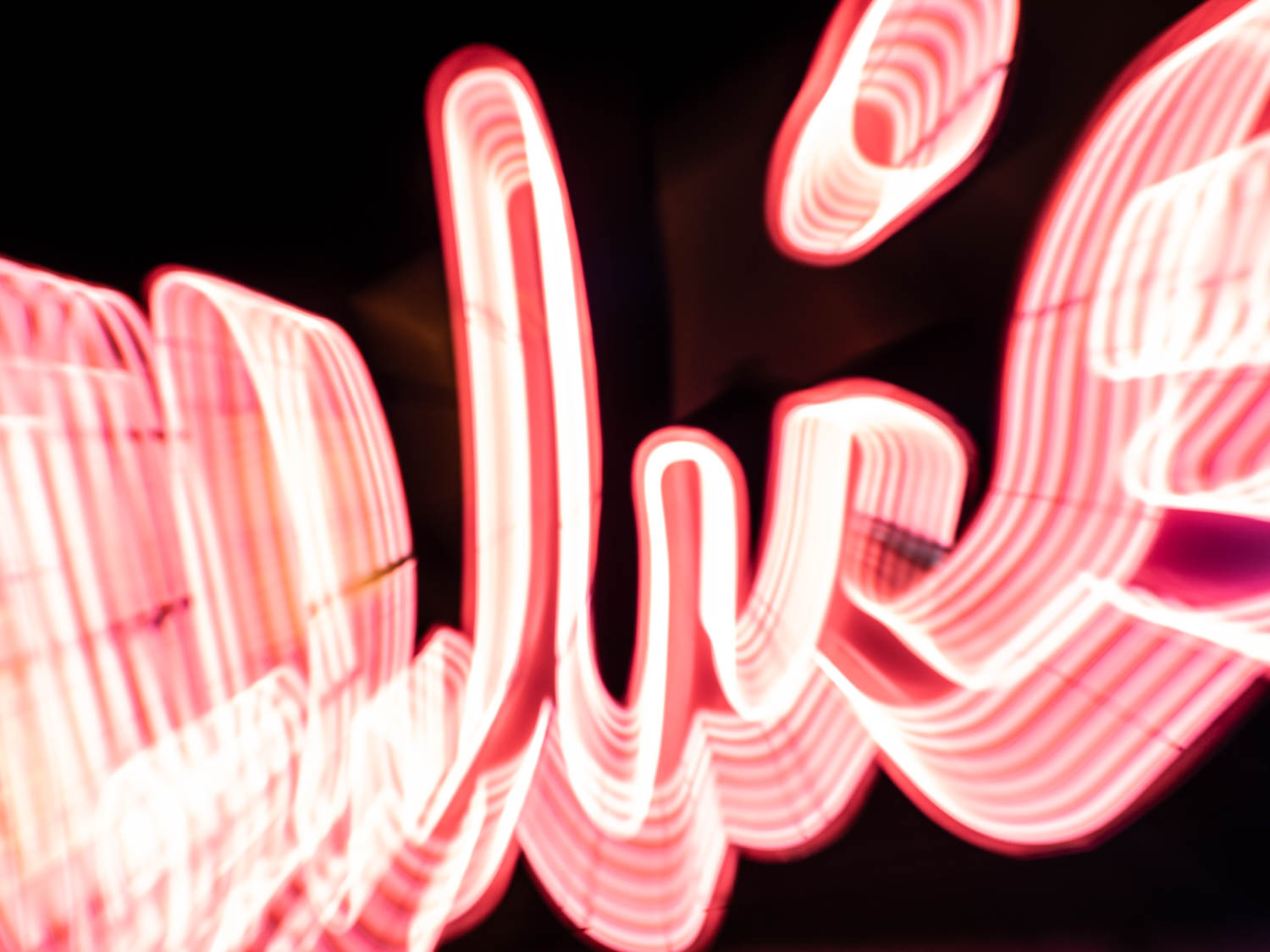
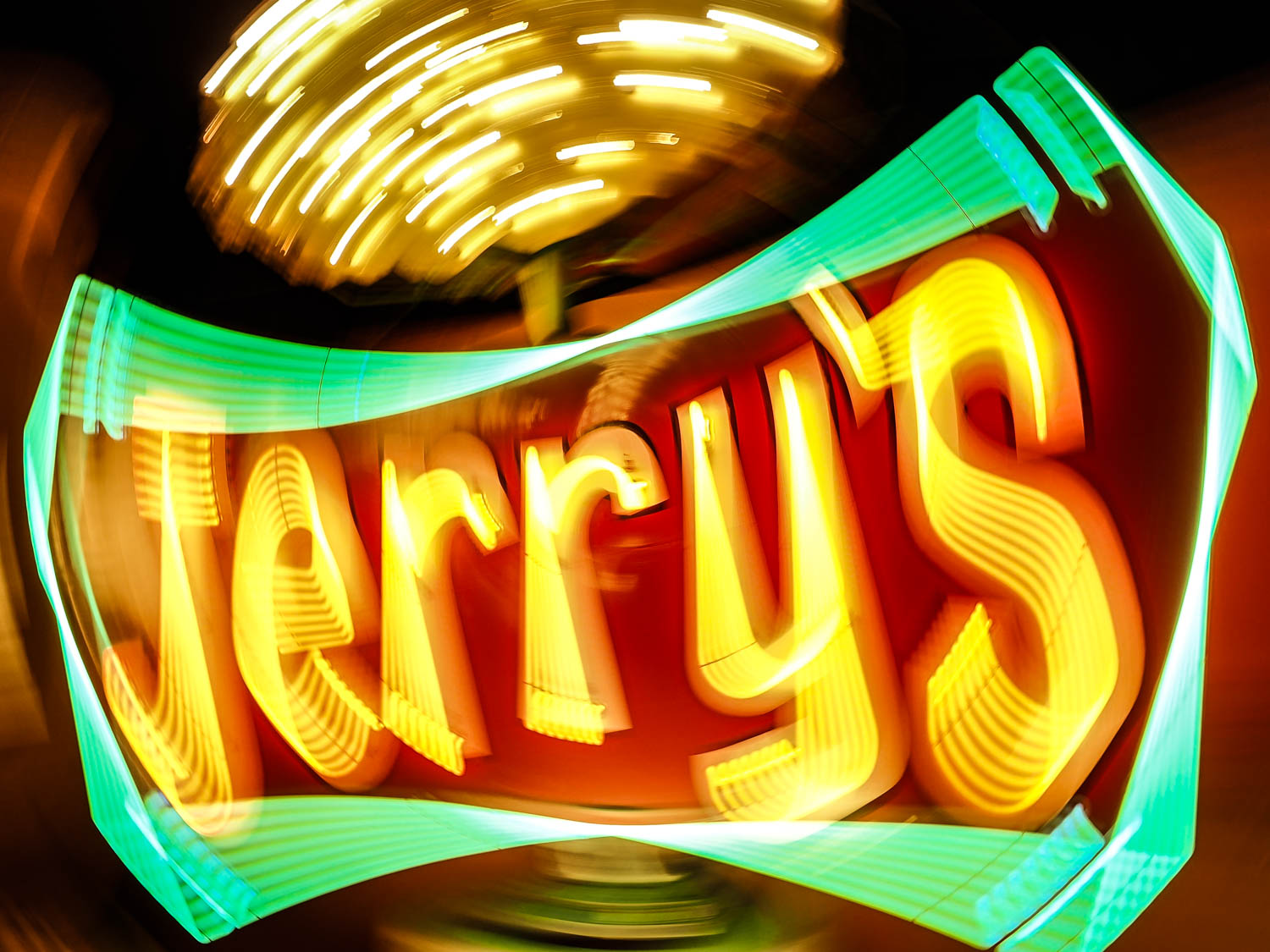
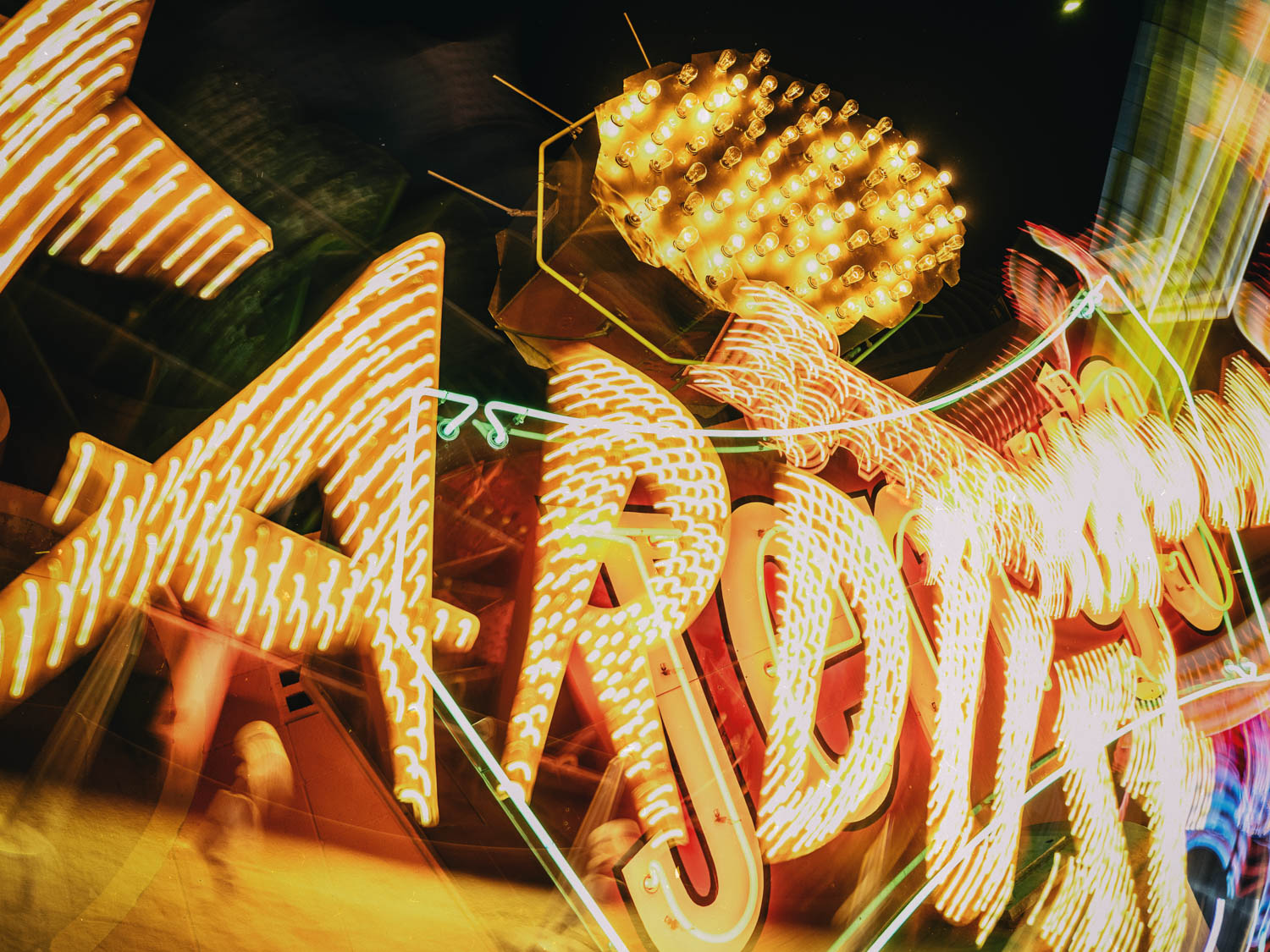
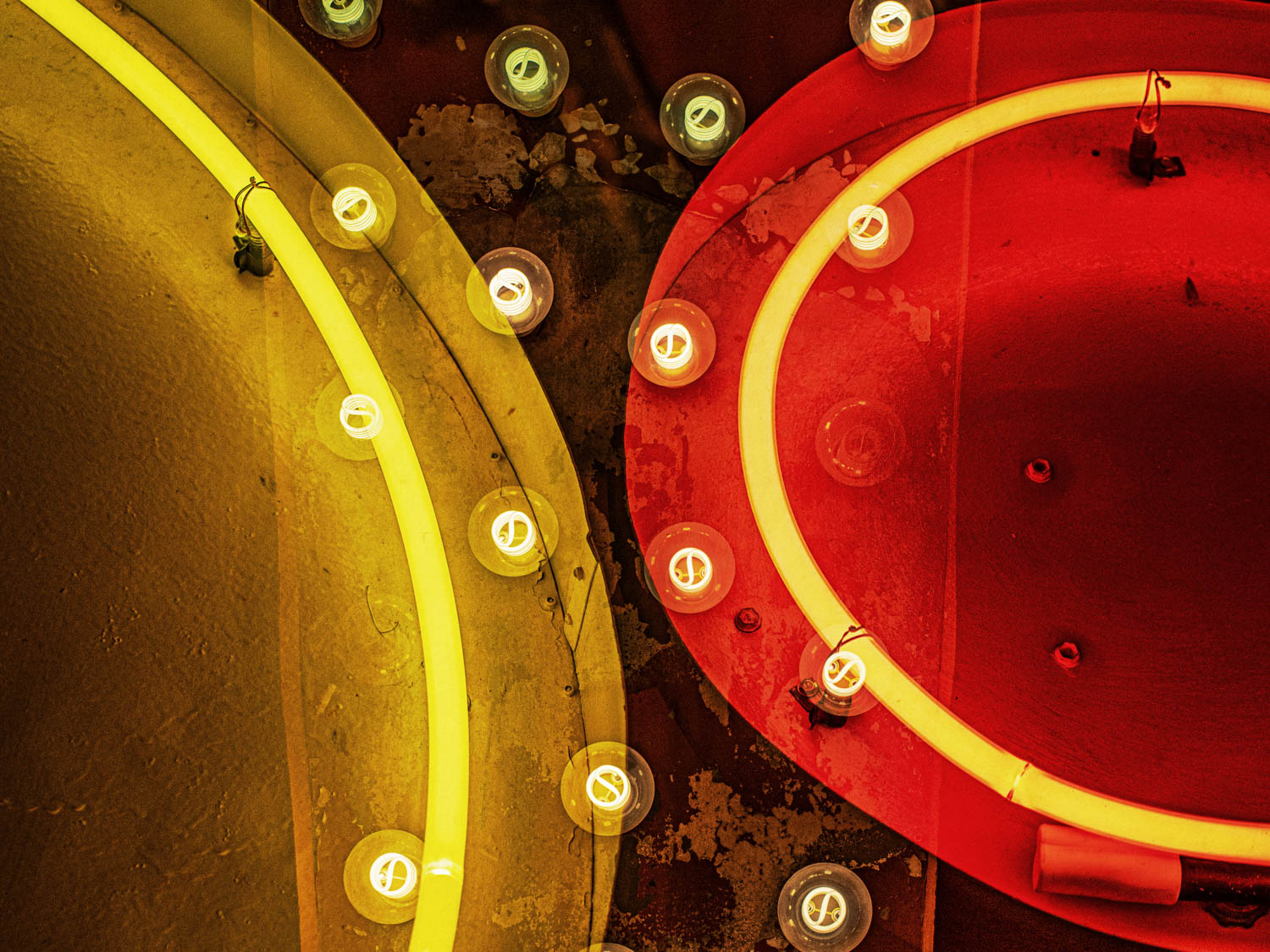
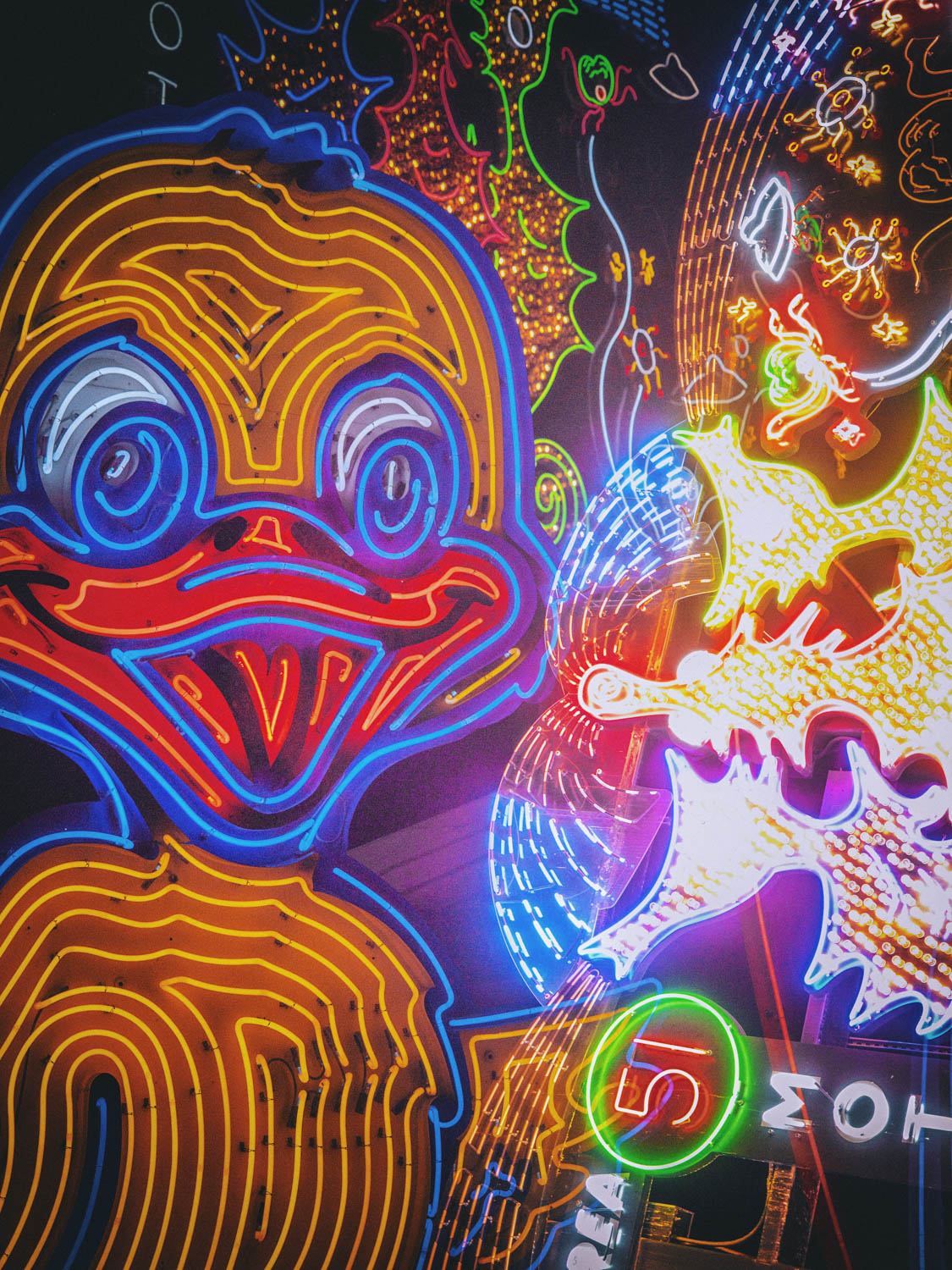
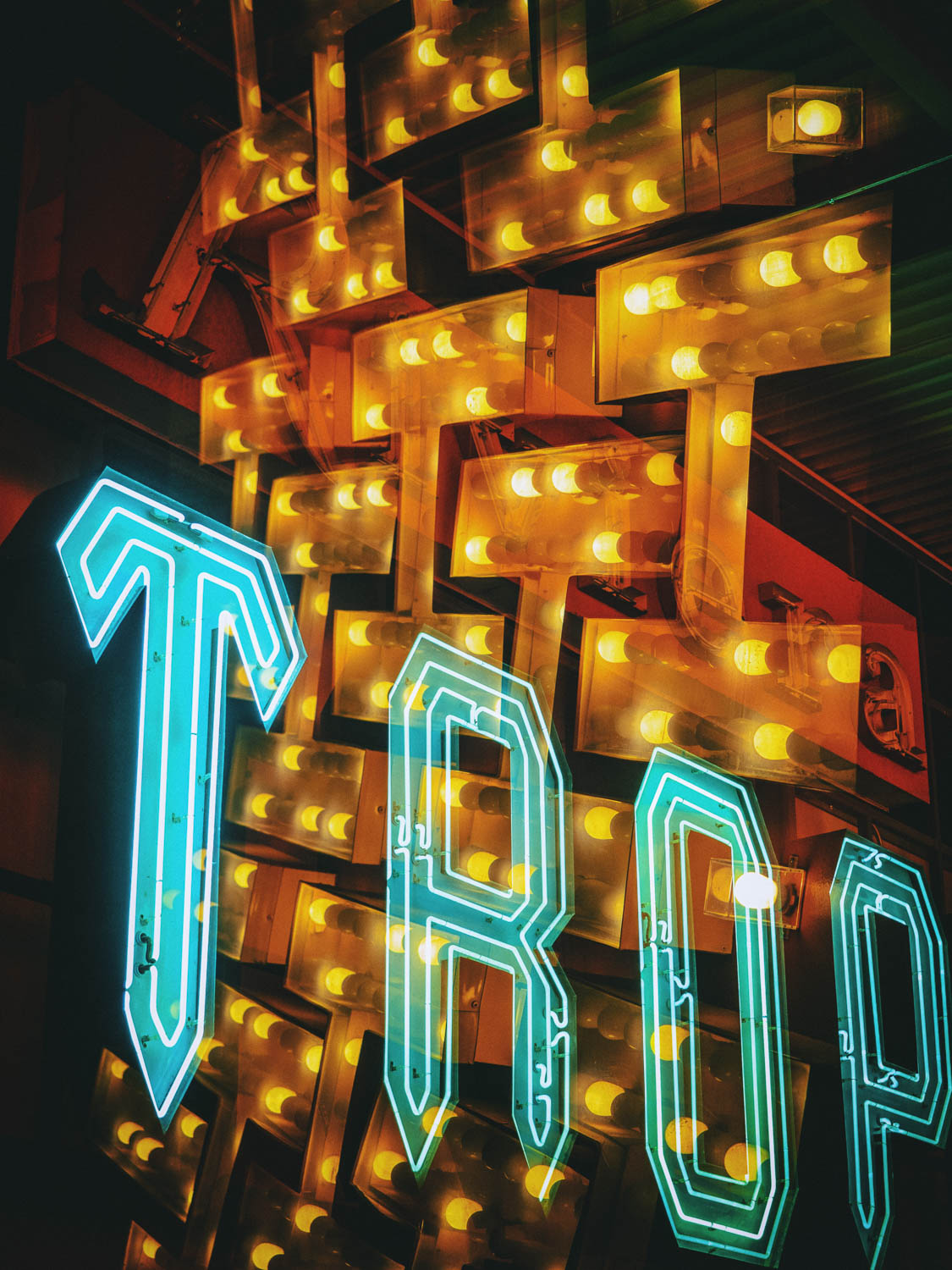
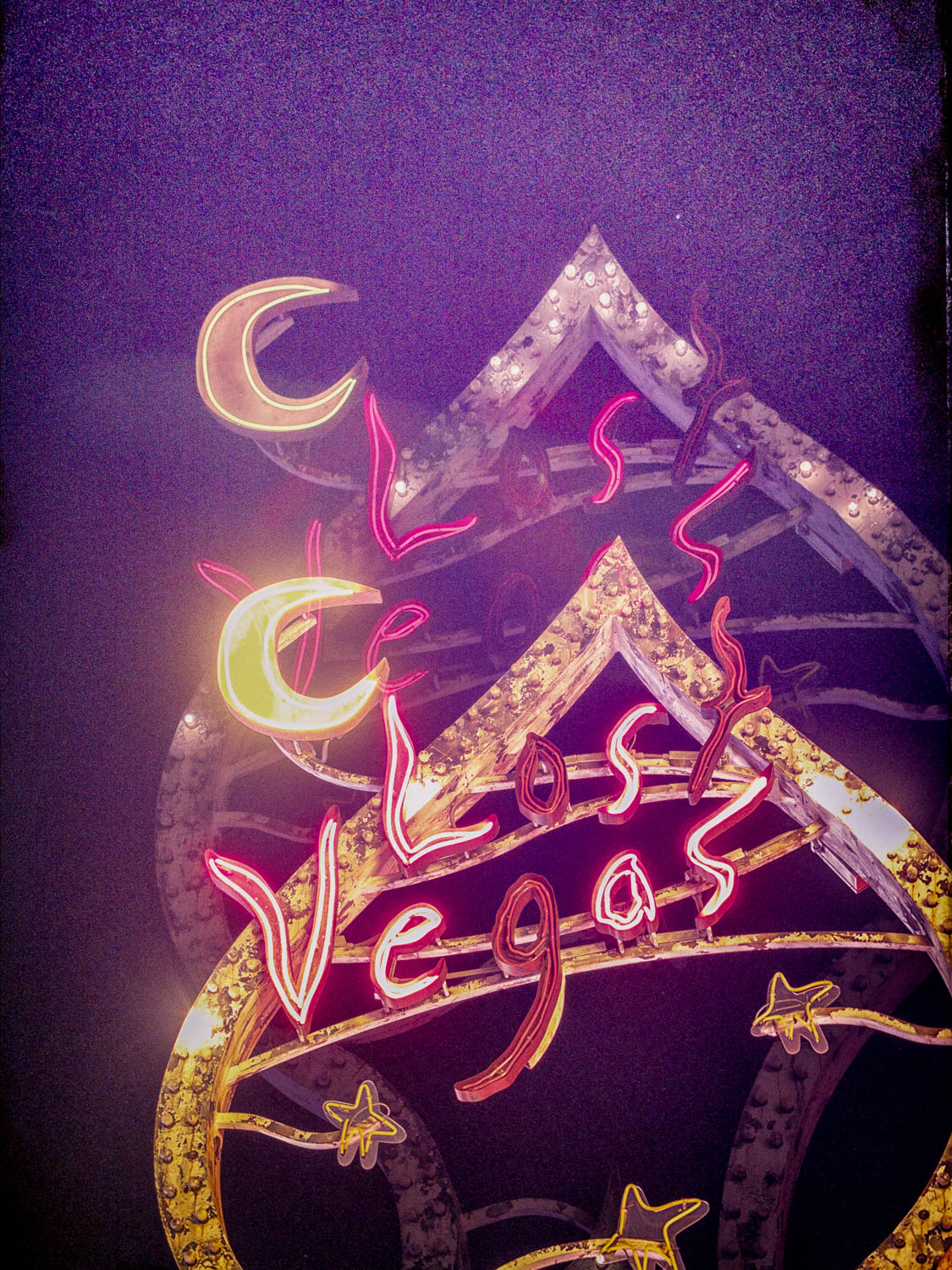
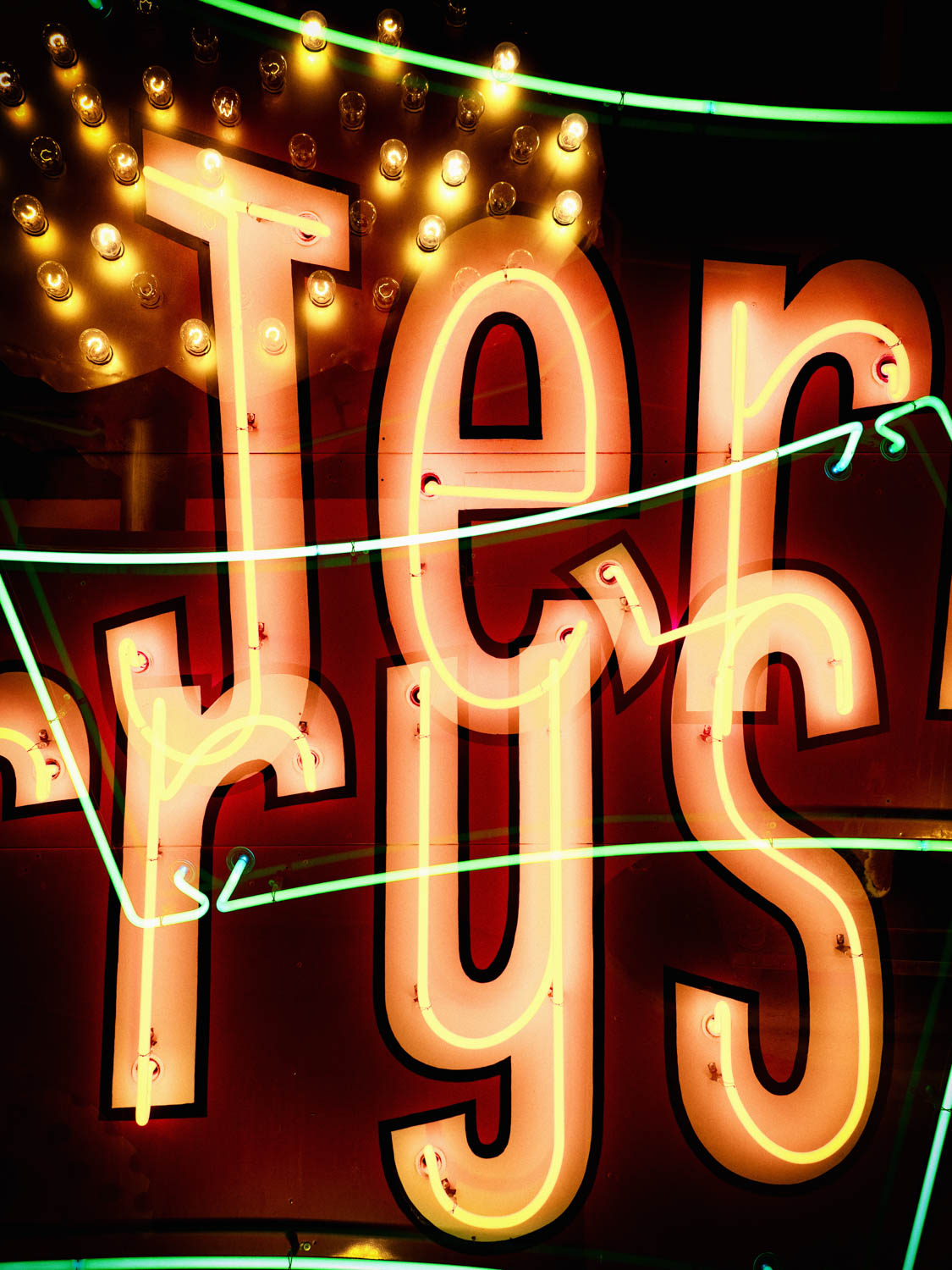
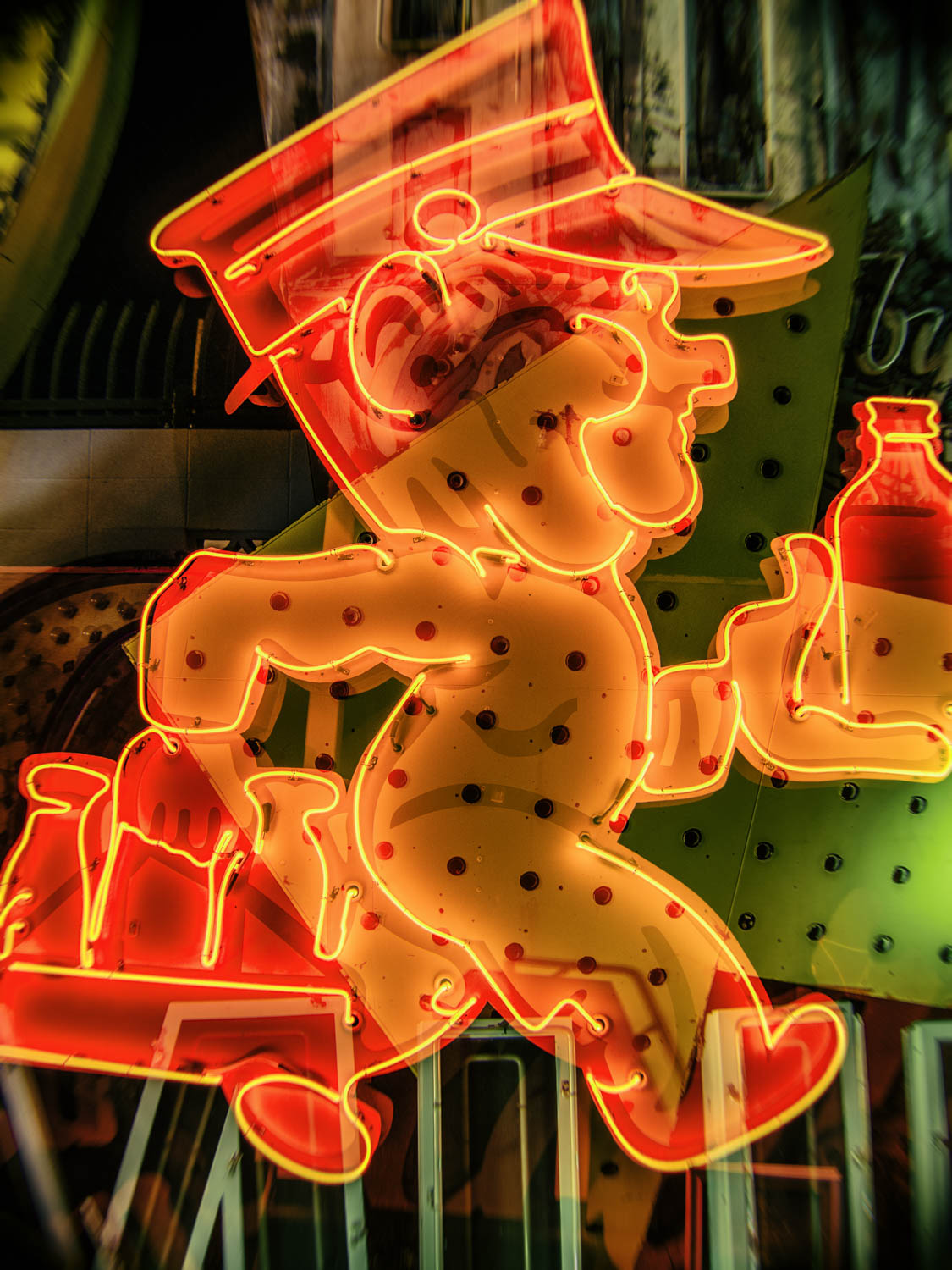
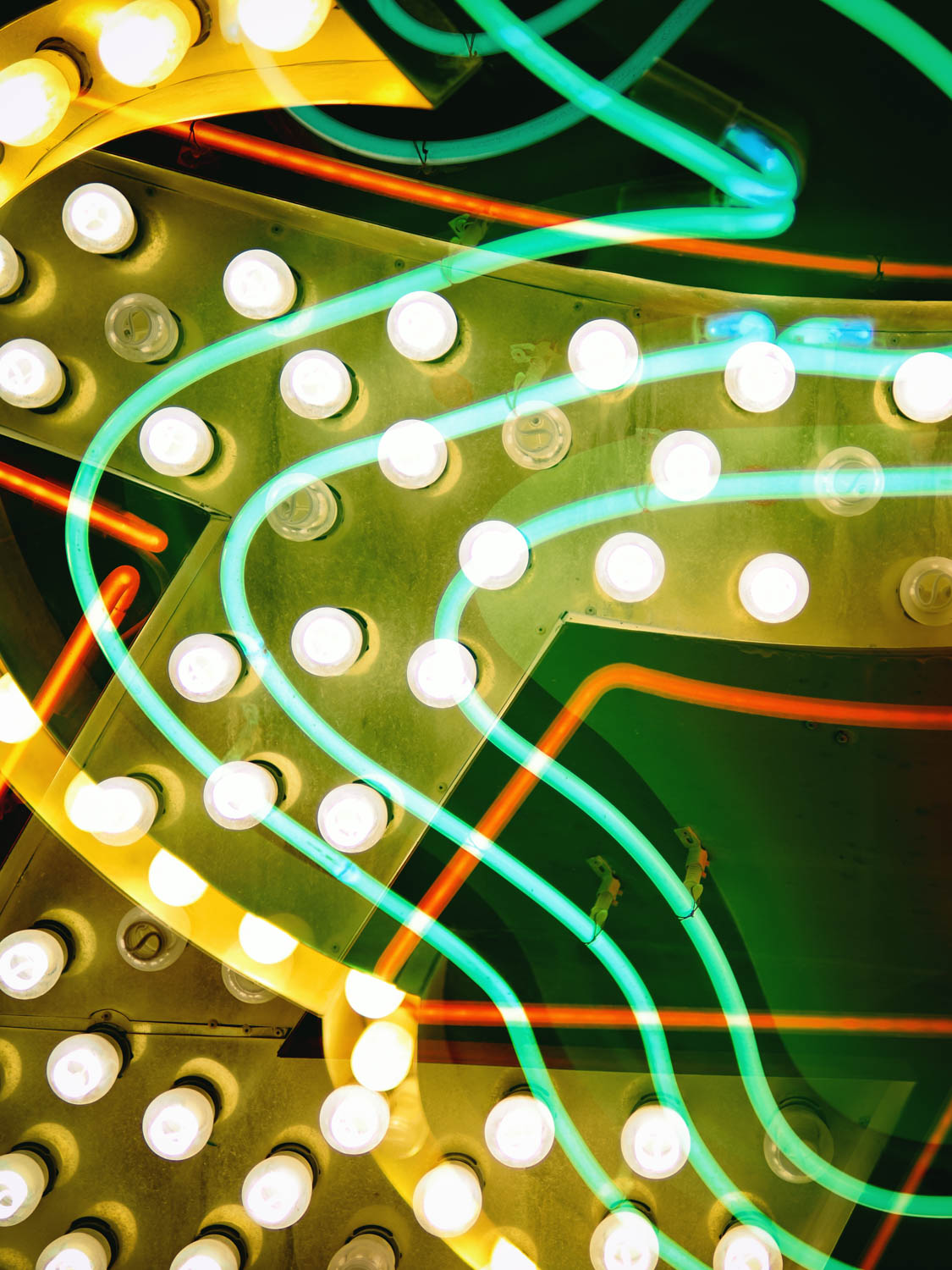
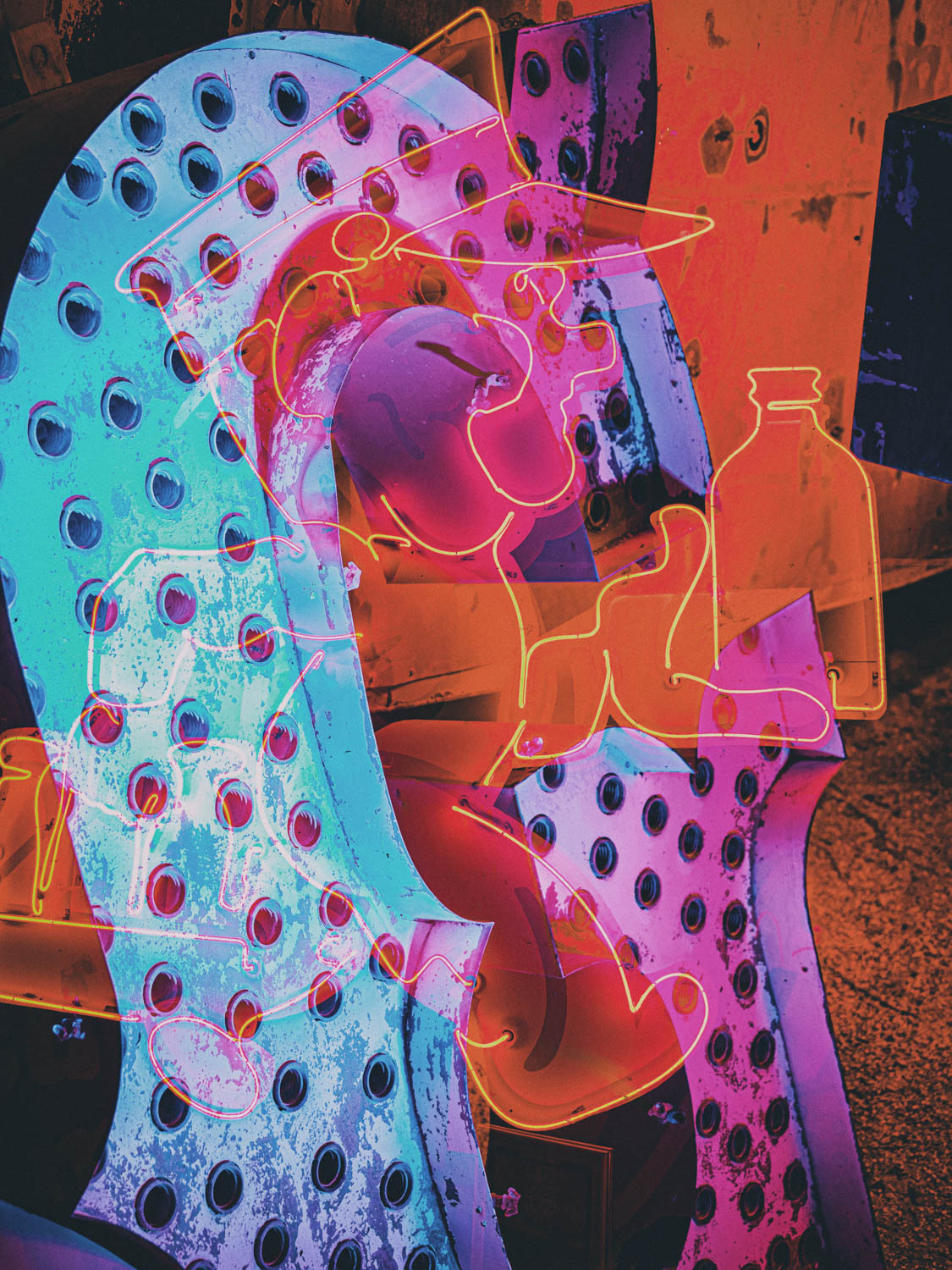
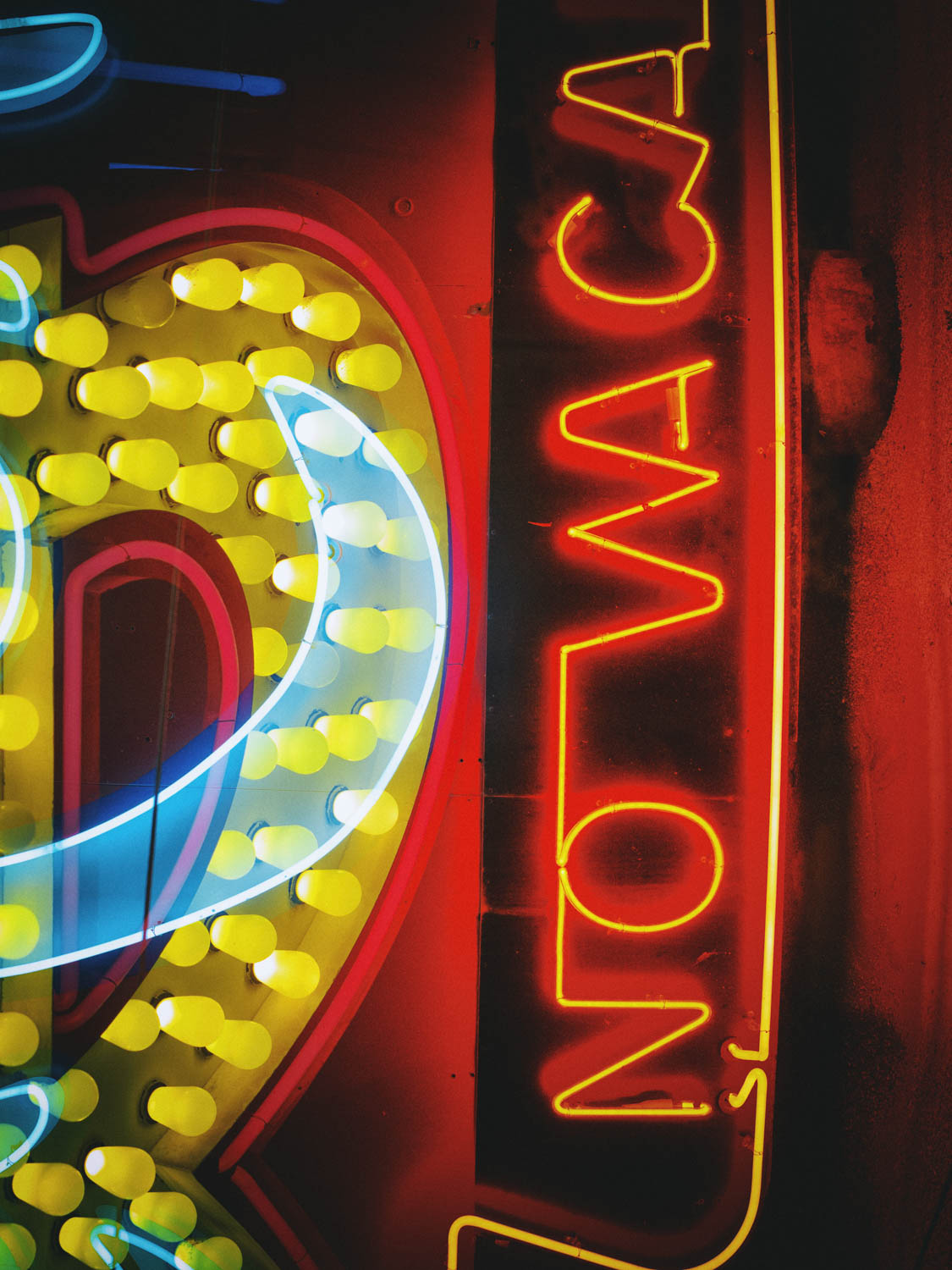
To push the effect even further, I began zooming during exposures and slightly rotating the camera to introduce motion blur. The result felt almost like light painting, but using the neon signs themselves as the brush.
Each image became a unique collision of color, shape, and movement.
Getting Unstuck
One of the biggest lessons from these two photowalks was a simple reminder: when you feel creatively stuck, the best solution is often to change something.
Try a new technique.
Switch lenses.
Limit your gear.
Or even intentionally use a “bad” lens.
Small changes force you to see differently.
Photography isn’t just about capturing what’s in front of you—it’s about discovering new ways to interpret the same scene. And sometimes all it takes to break through a creative block is a willingness to experiment.
