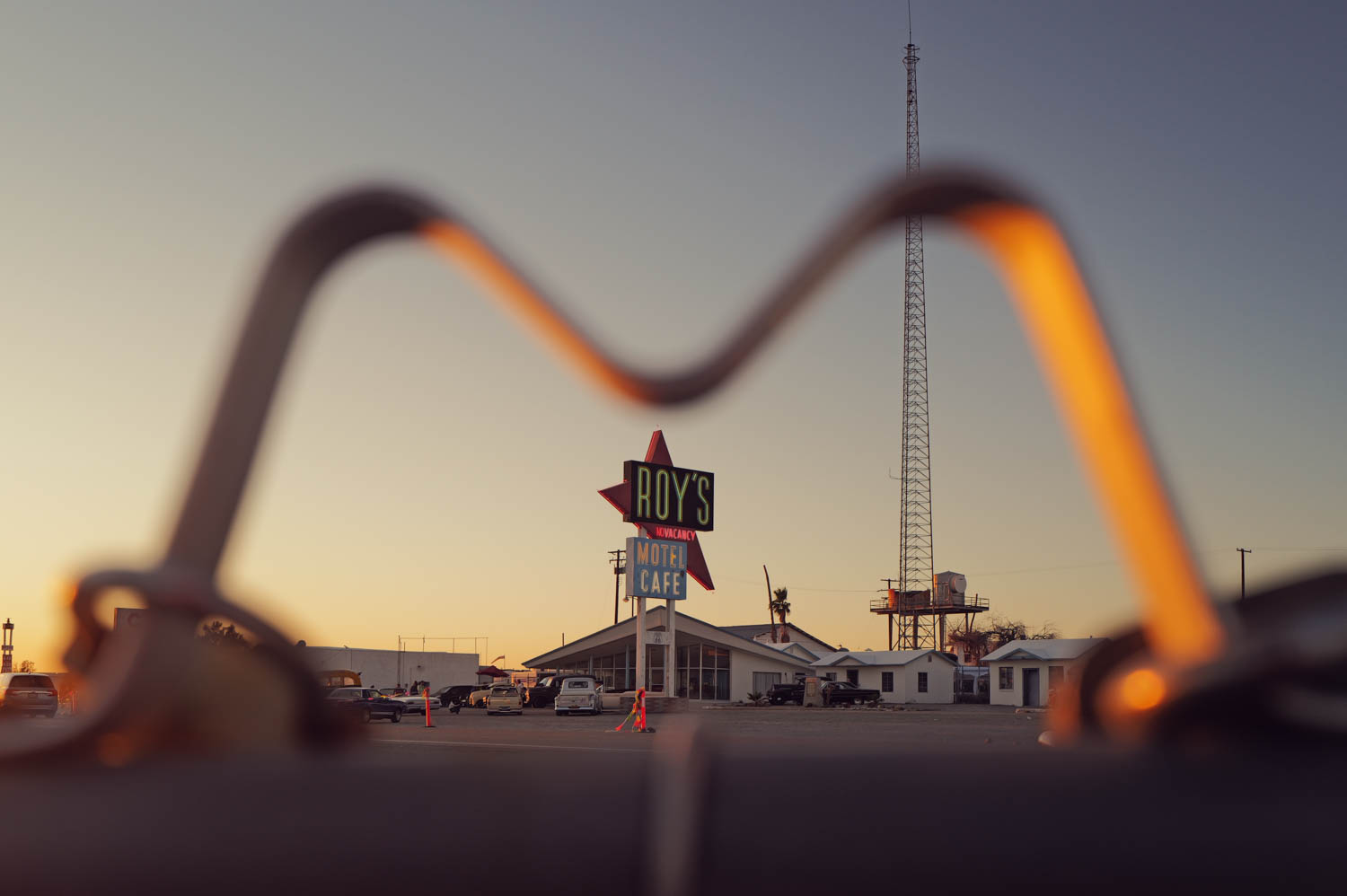
On March 7th, I made the three-hour drive out to Amboy, California to visit Roy’s Motel & Café, one of the most recognizable landmarks along the legendary Route 66. Known as “The Mother Road,” Route 66 once stretched roughly 2,448 miles from Chicago to Santa Monica, carrying generations of travelers west in search of opportunity, adventure, and the open road.
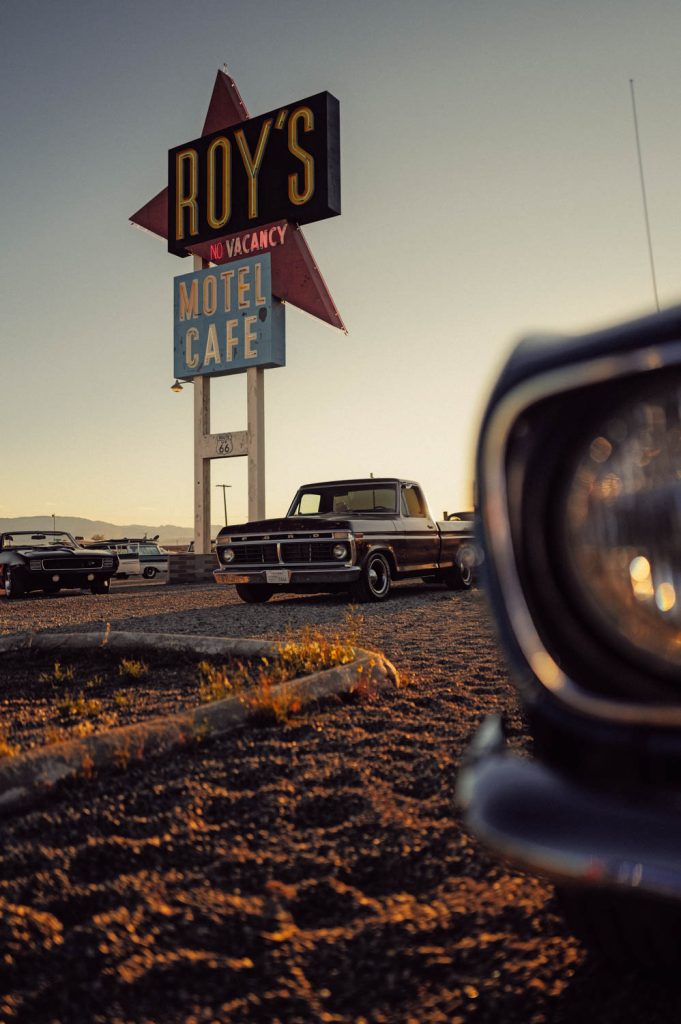
Amboy sits deep in the Mojave Desert, surrounded by wide open spaces, lava fields, and the dormant Amboy Crater volcano nearby. It’s the kind of place where the horizon seems endless and the silence of the desert is only broken by the wind and the occasional passing car.
Roy’s stands as a bright neon memory of Route 66’s golden age.
A Desert Stop That Once Never Slept
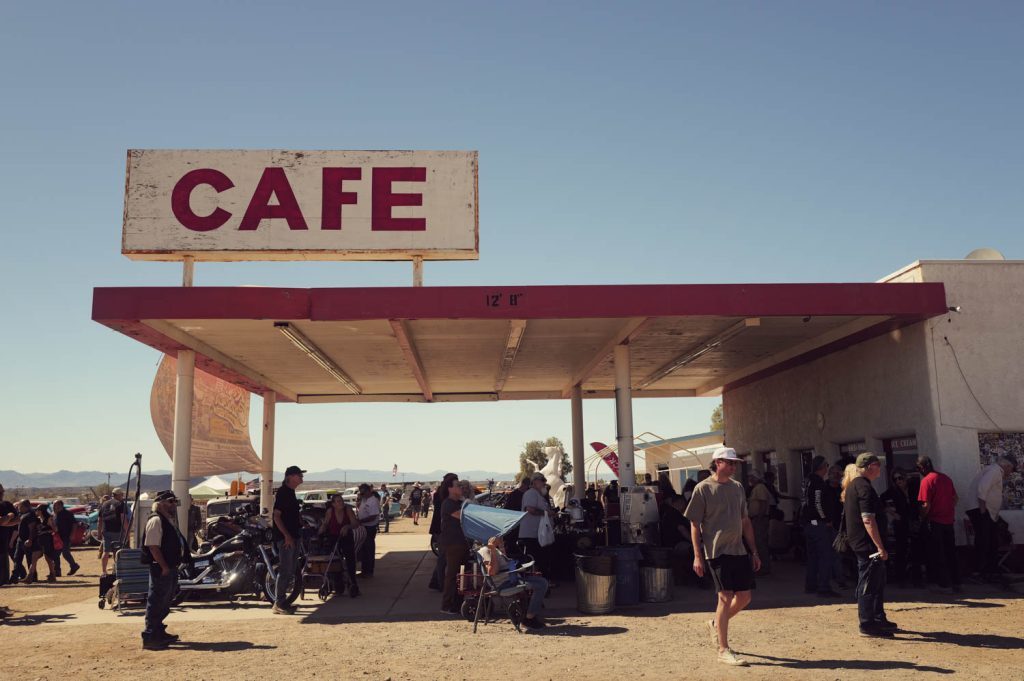
Roy’s began humbly as a gas station in 1938, built to serve travelers crossing the remote Mojave Desert. By the 1940s and 1950s, it had grown into a full roadside complex featuring a café, gas station, and motel that operated 24 hours a day.
For drivers crossing hundreds of miles of desert, Roy’s wasn’t just a convenience stop—it was a lifeline.
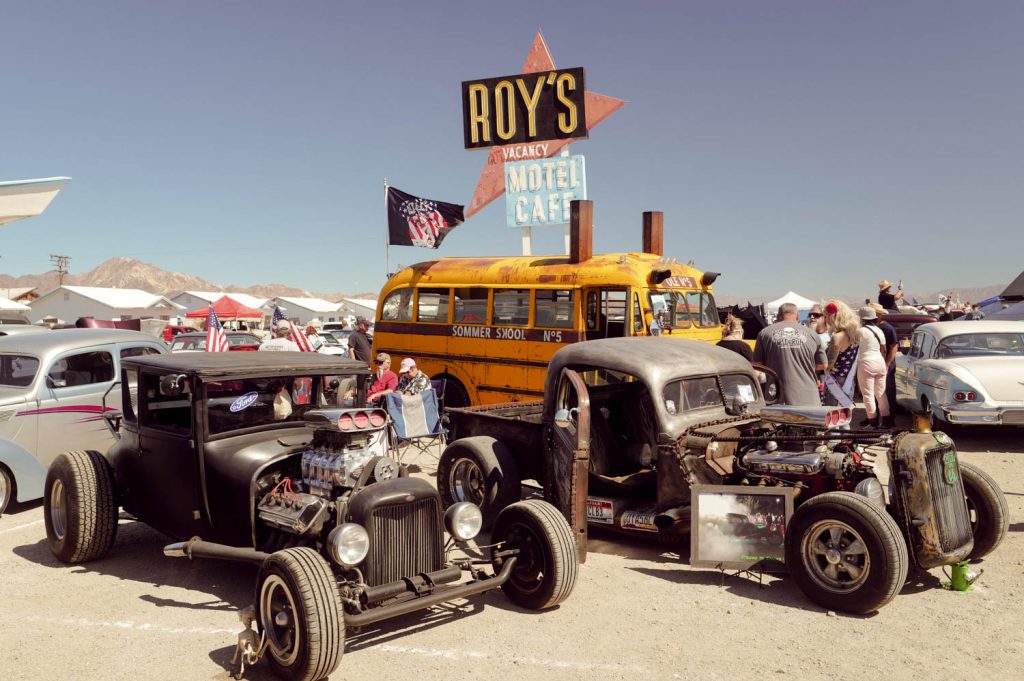
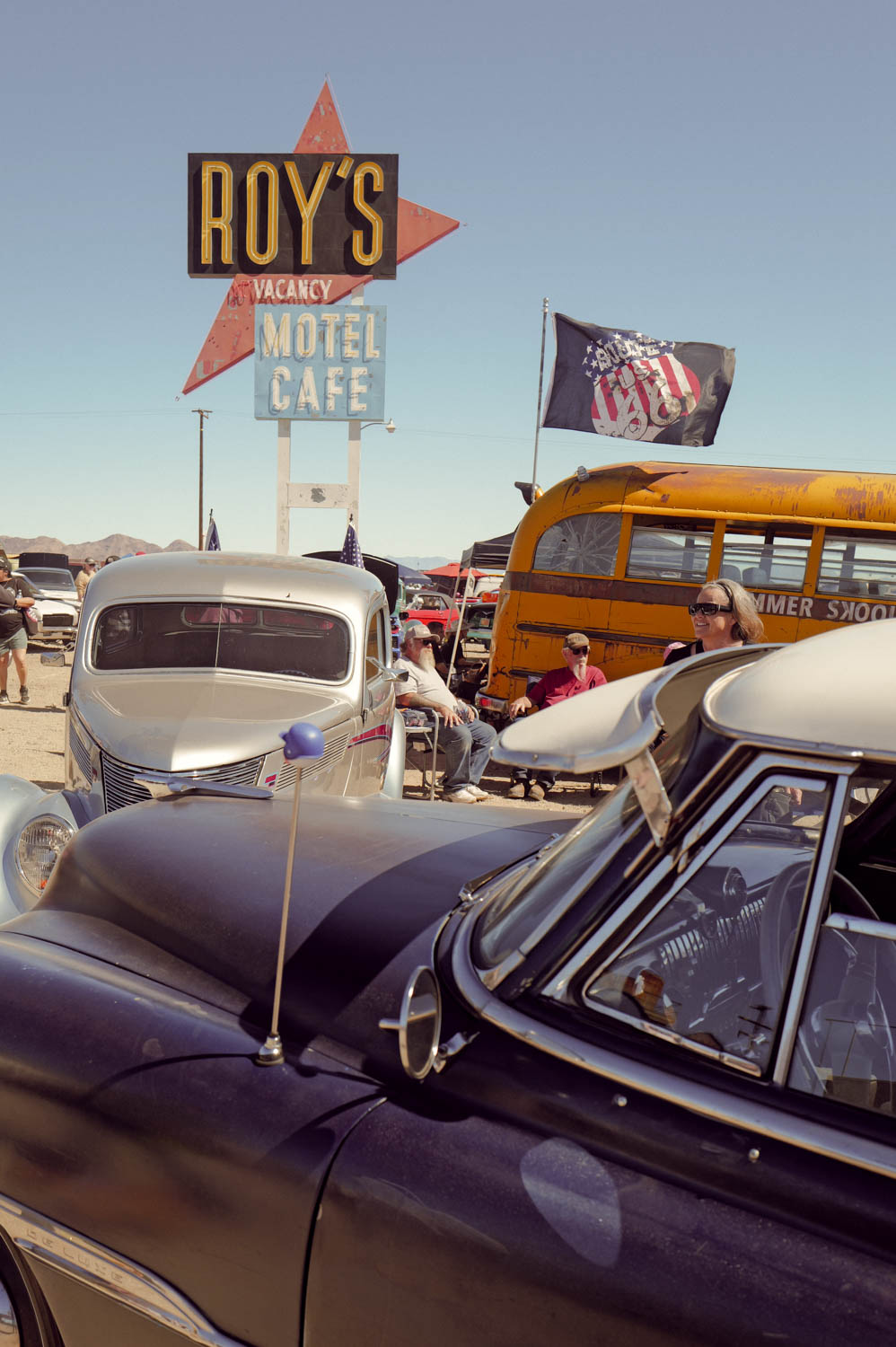
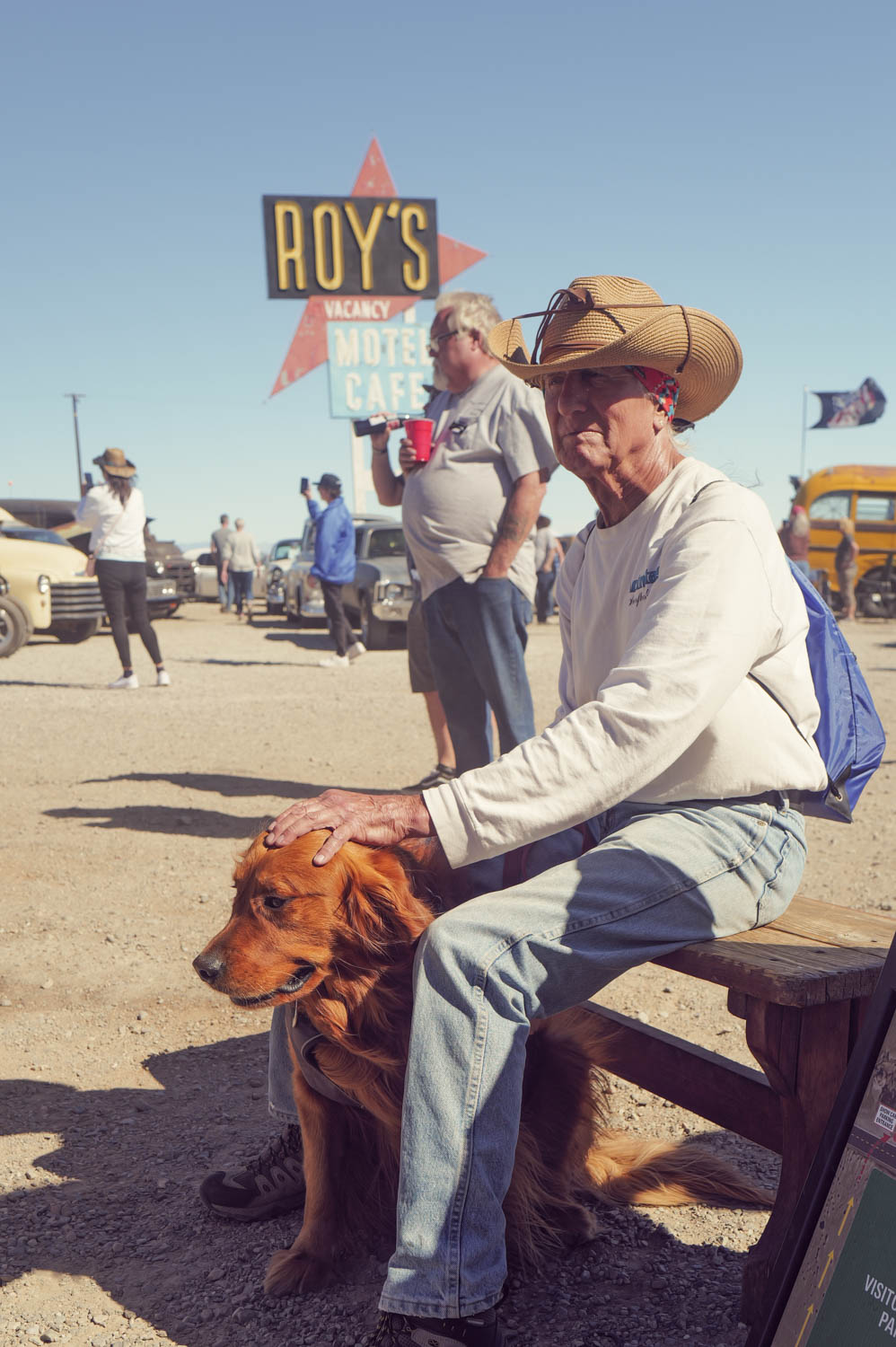
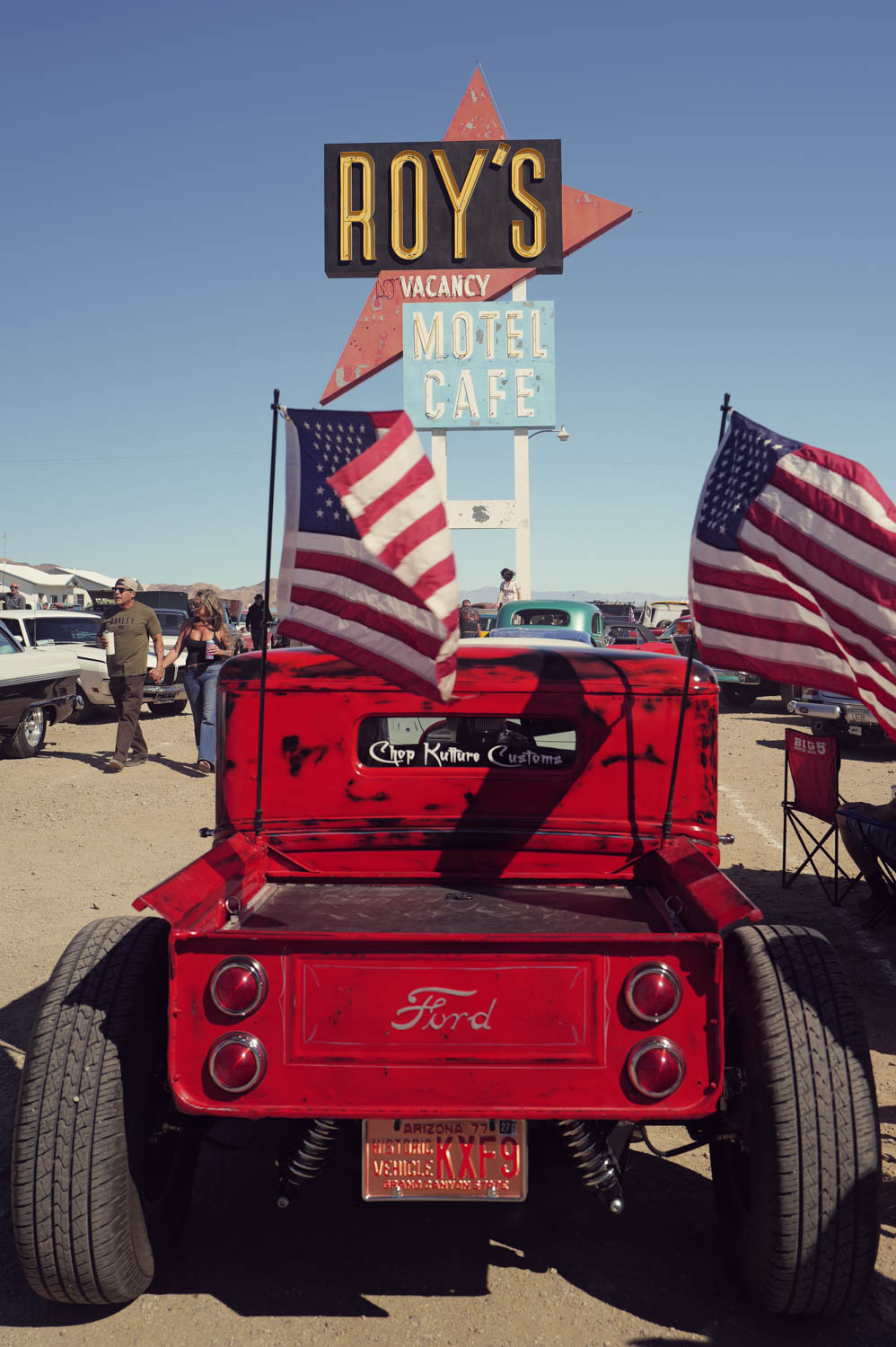
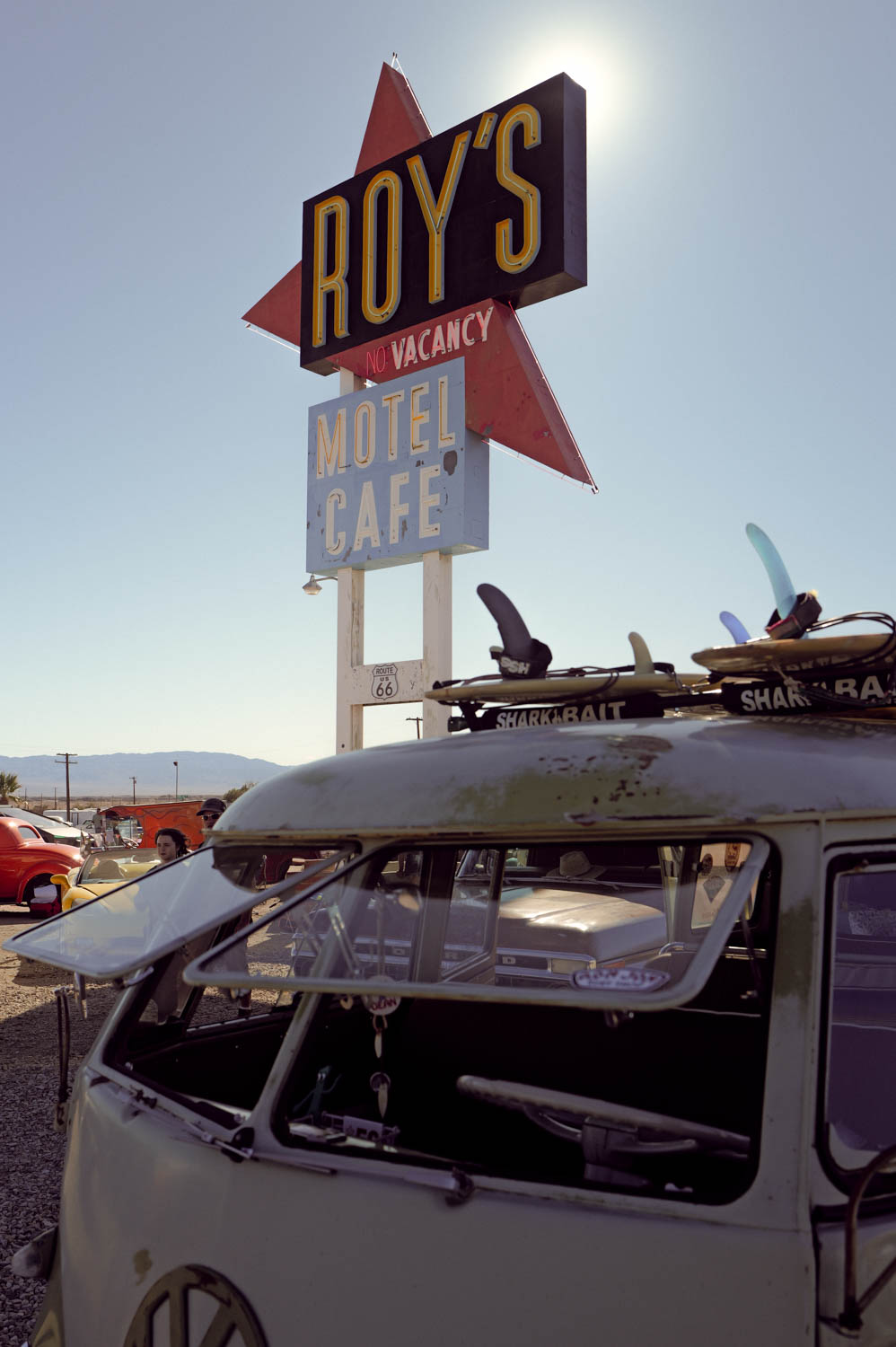
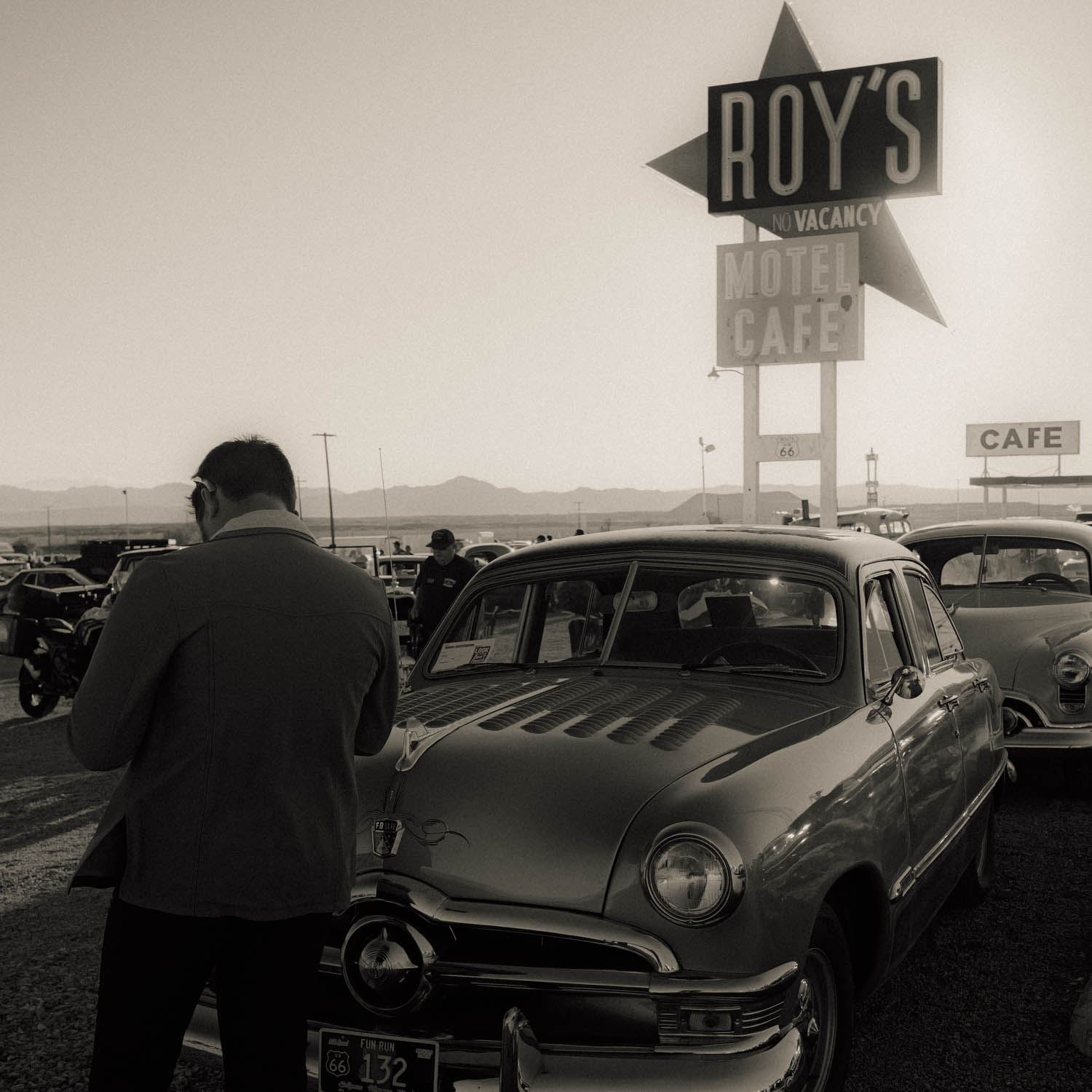
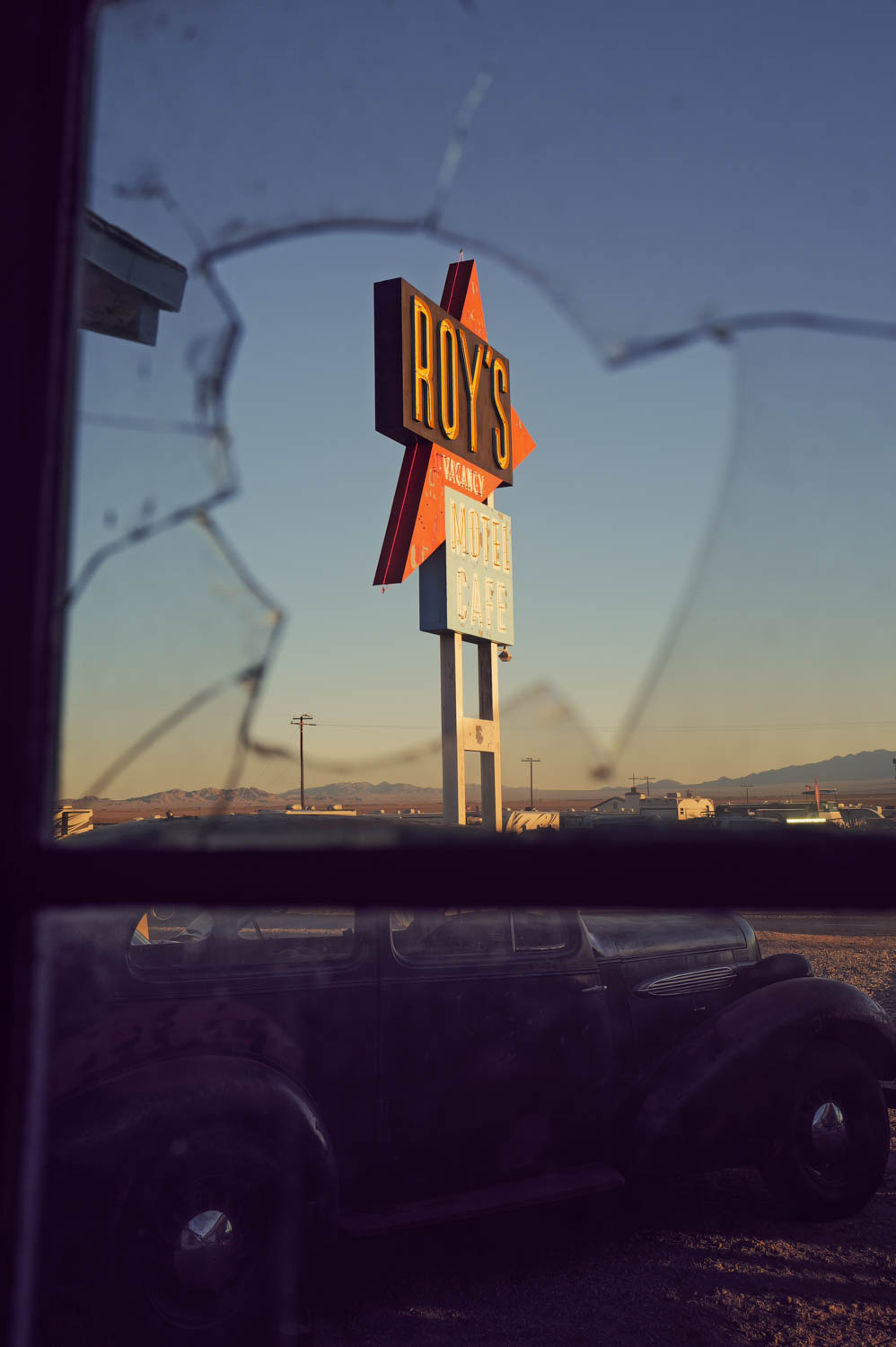
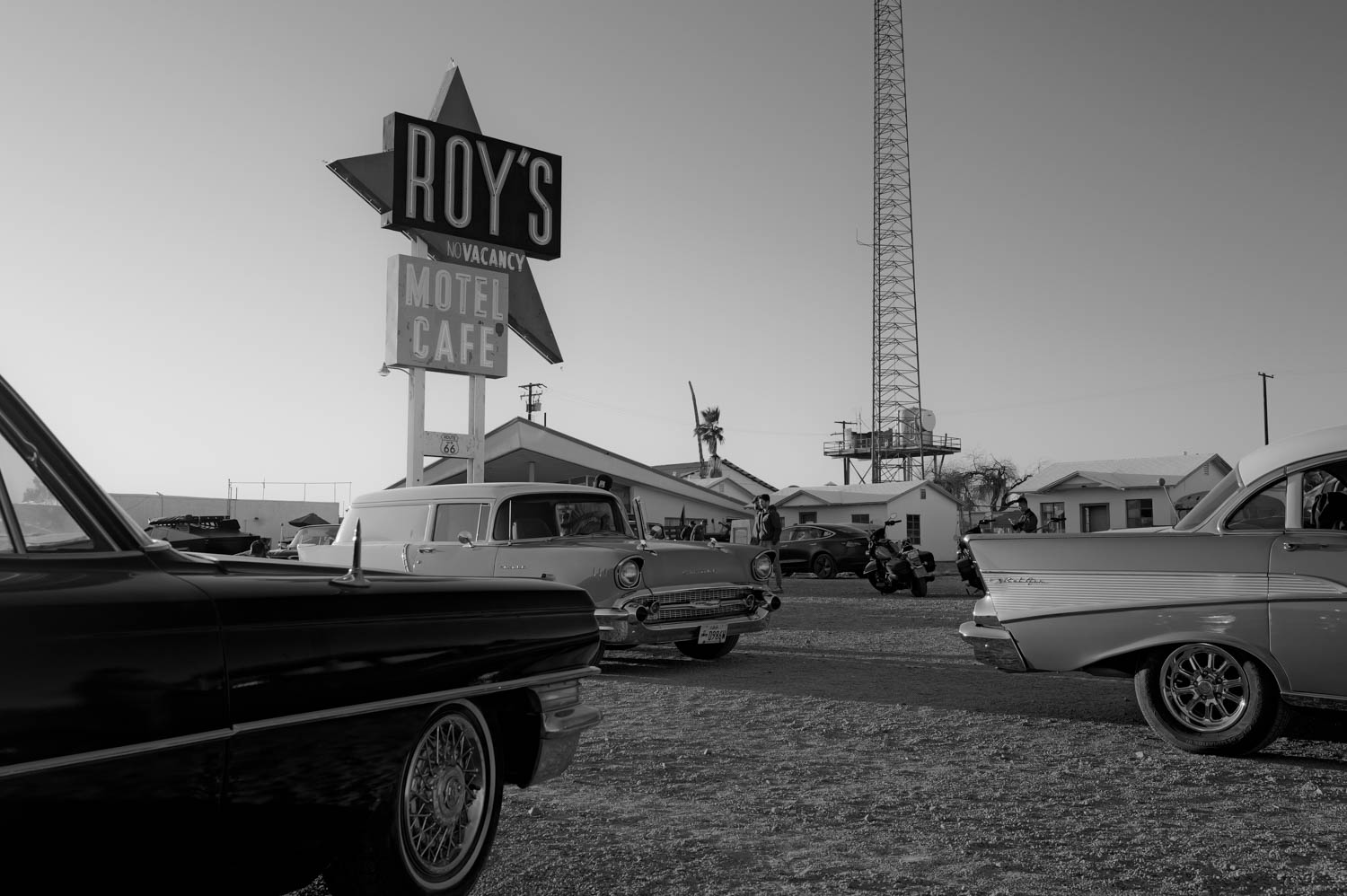
The site became famous for its towering Googie-style neon sign, an architectural style popular in mid-century roadside America. Designed to catch the attention of motorists speeding down the highway, the starburst sign with its bold “ROY’S” lettering became one of the most photographed signs on Route 66.

At its peak, Amboy had a school, post office, and several businesses serving travelers.
Then everything changed in 1972.
When Interstate 40 was built nearby, it bypassed Route 66 and traffic through Amboy collapsed almost overnight. Businesses closed, residents moved away, and Roy’s slowly faded into a ghost of its former self.
But the story didn’t end there.
In 2005, Albert Okura, founder of the Juan Pollo restaurant chain, purchased the entire town of Amboy—including Roy’s—with the goal of preserving and restoring the historic Route 66 stop.
Thanks to those efforts, Roy’s has become a living monument to the road’s history.



The Route 66 Celebration
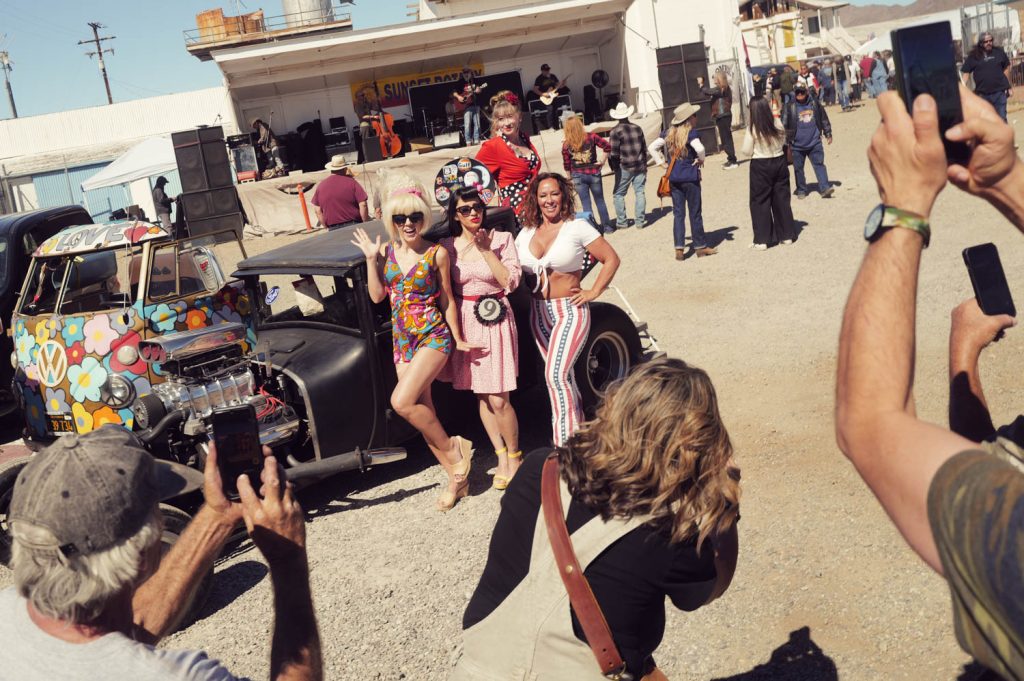
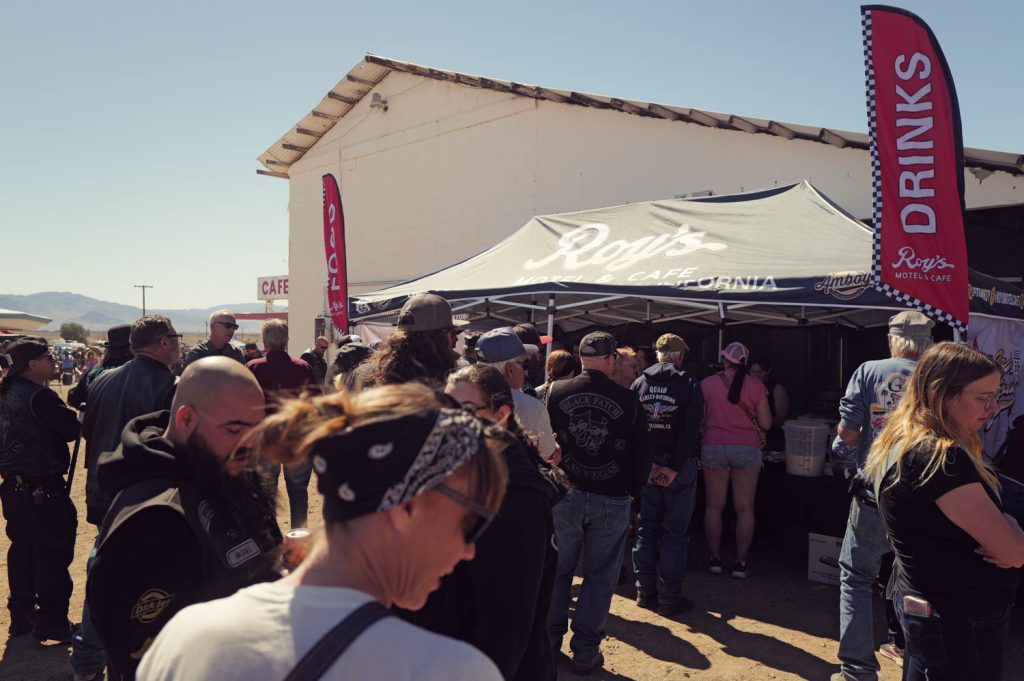
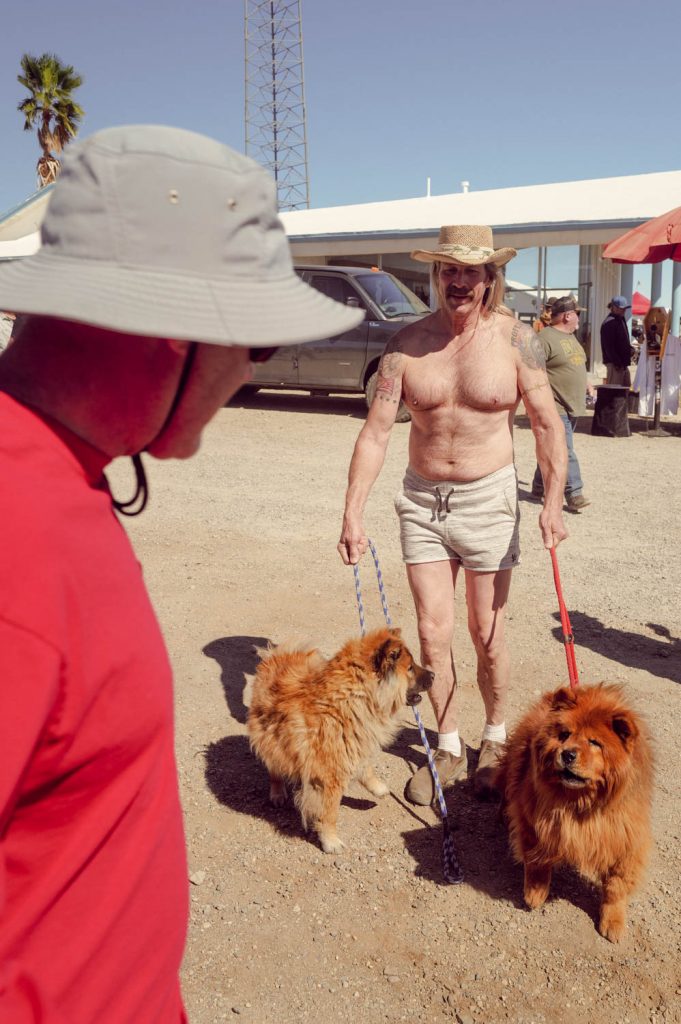
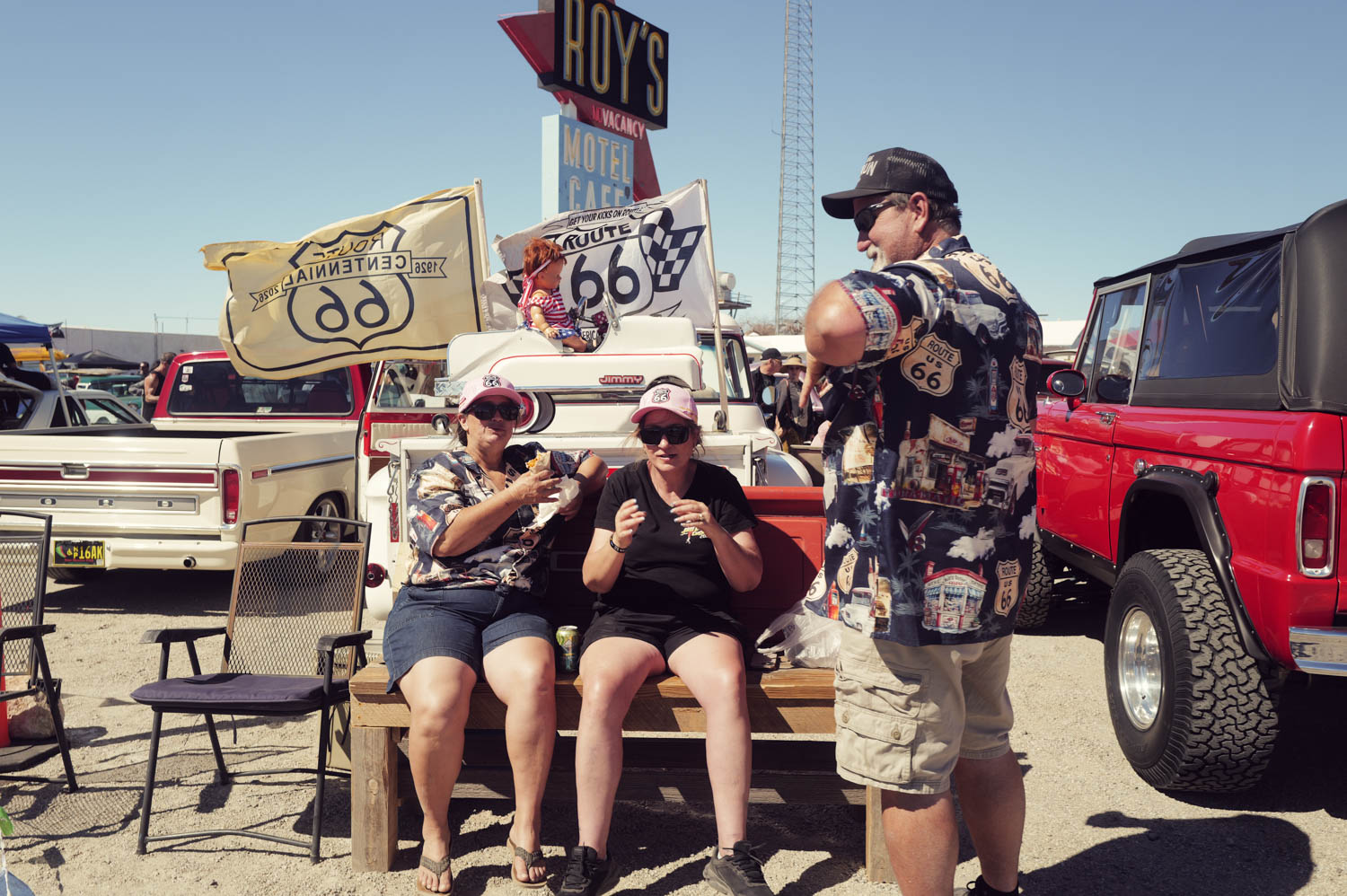
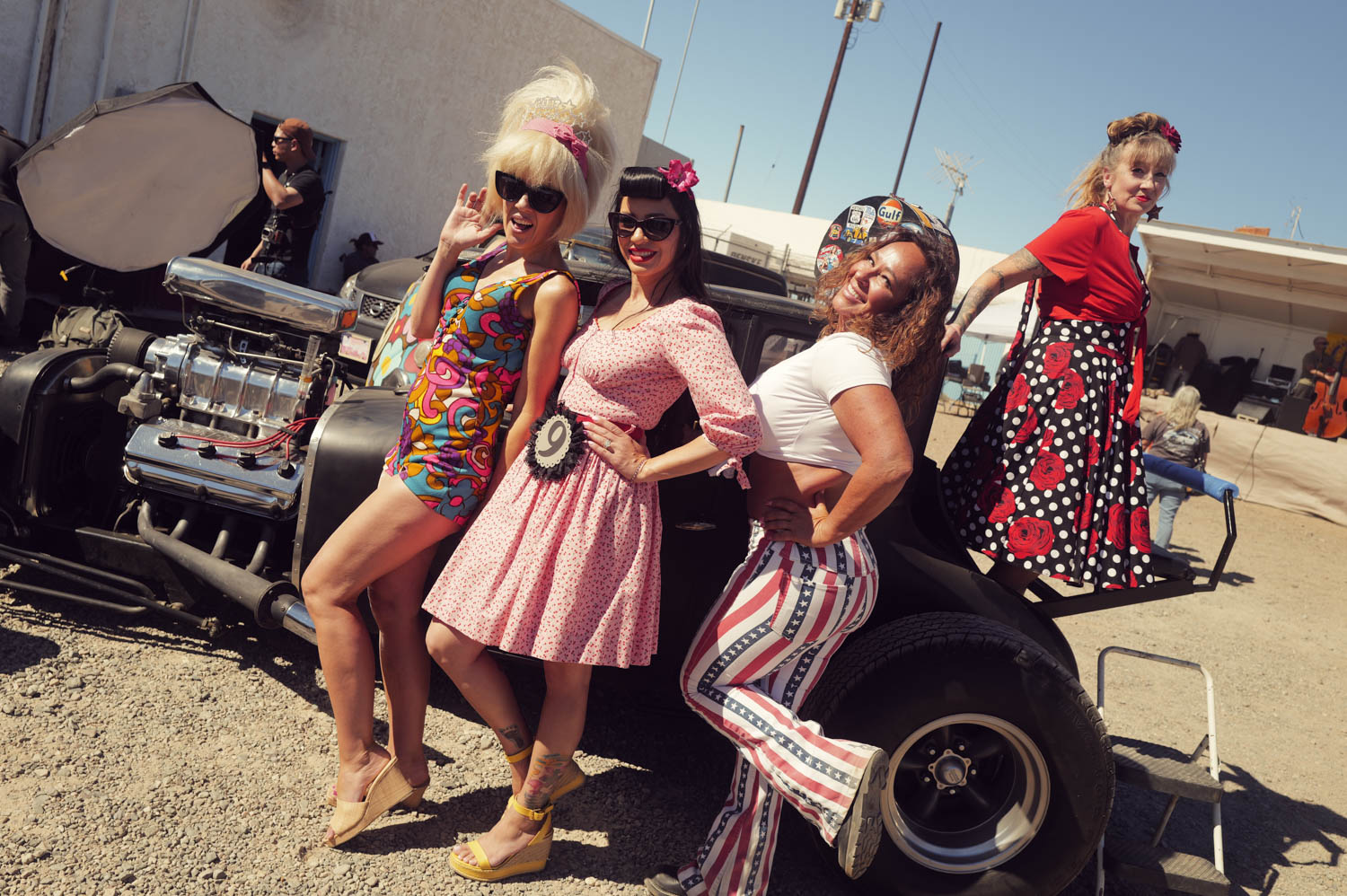
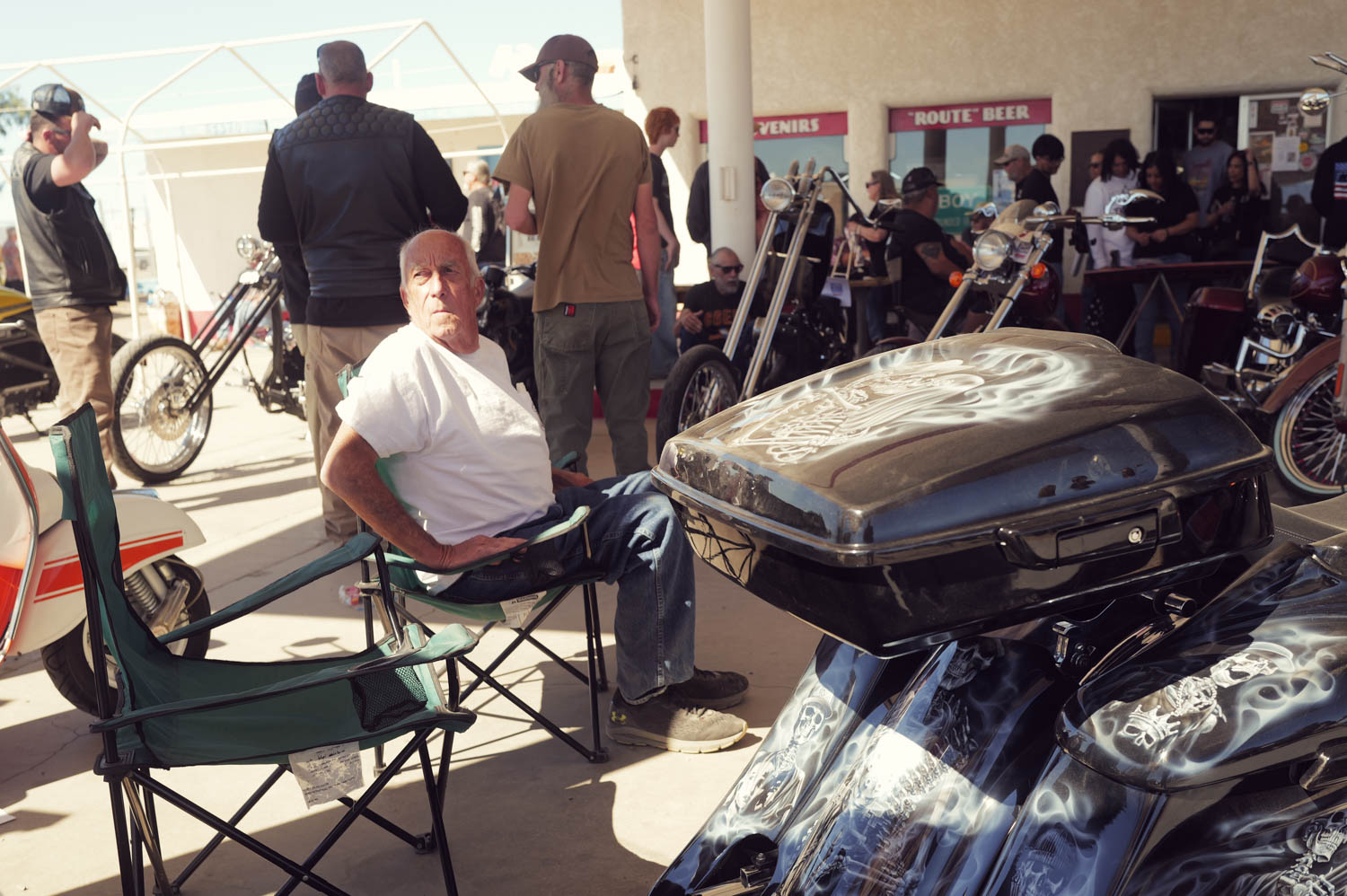
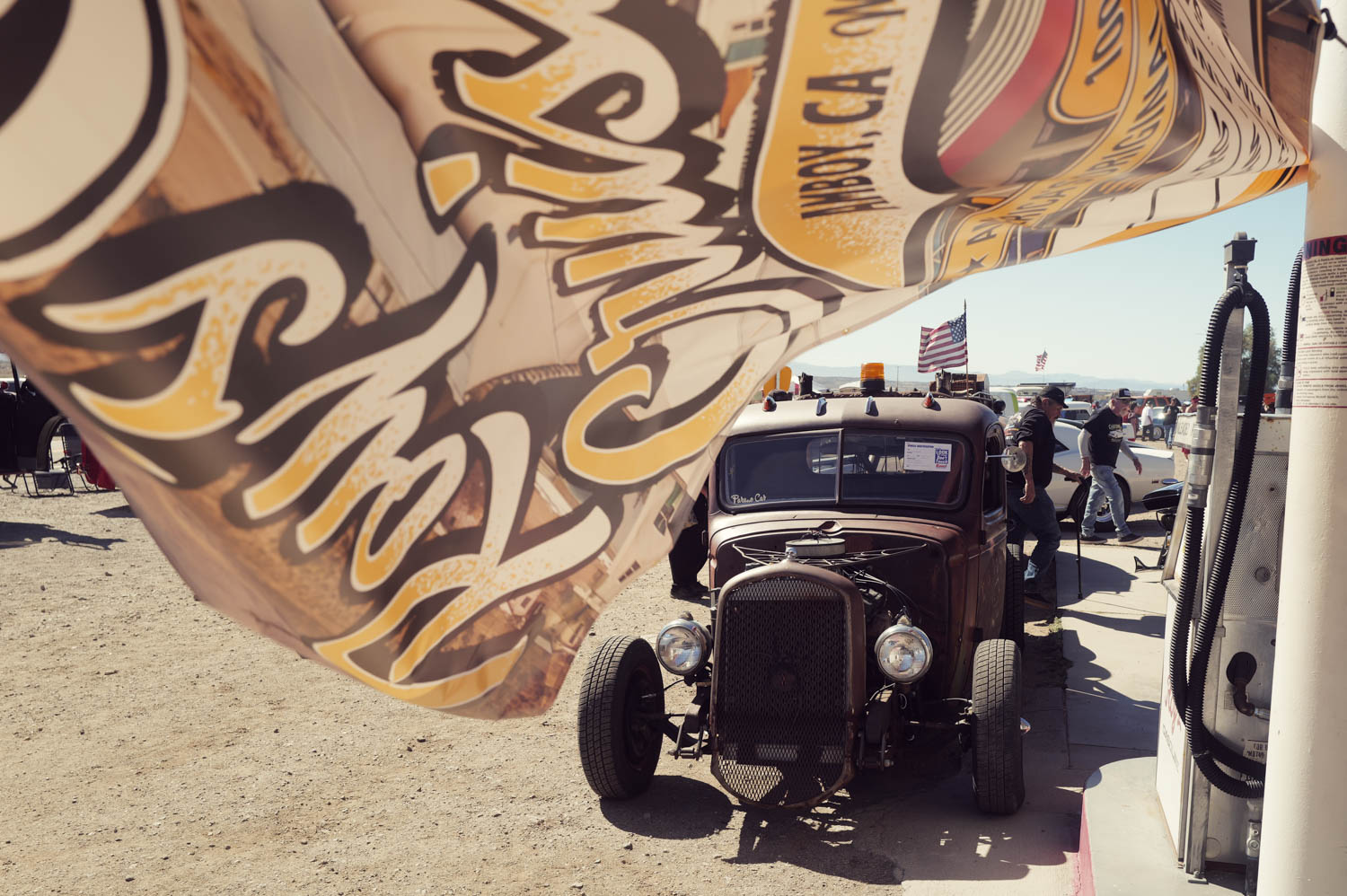
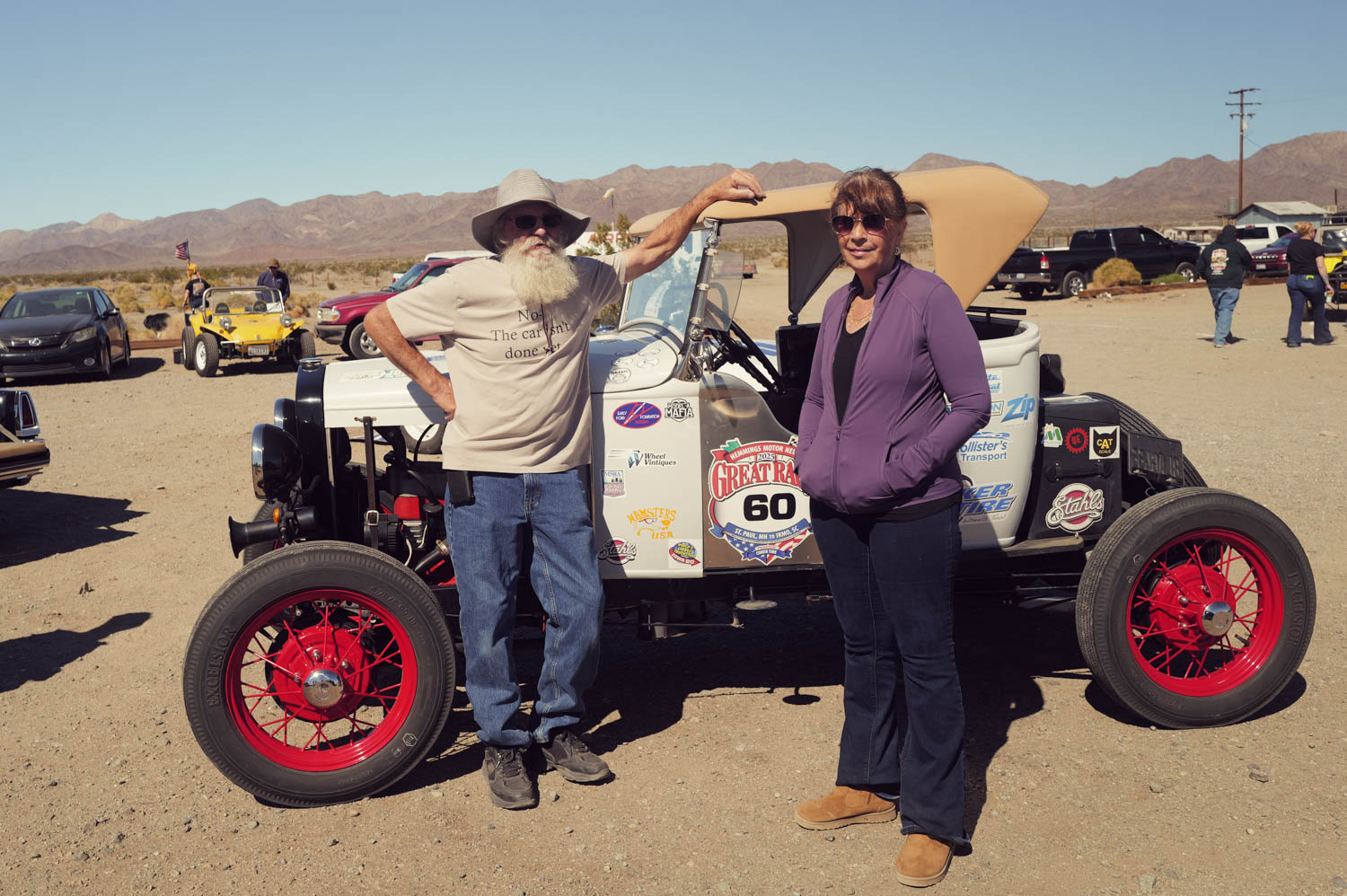
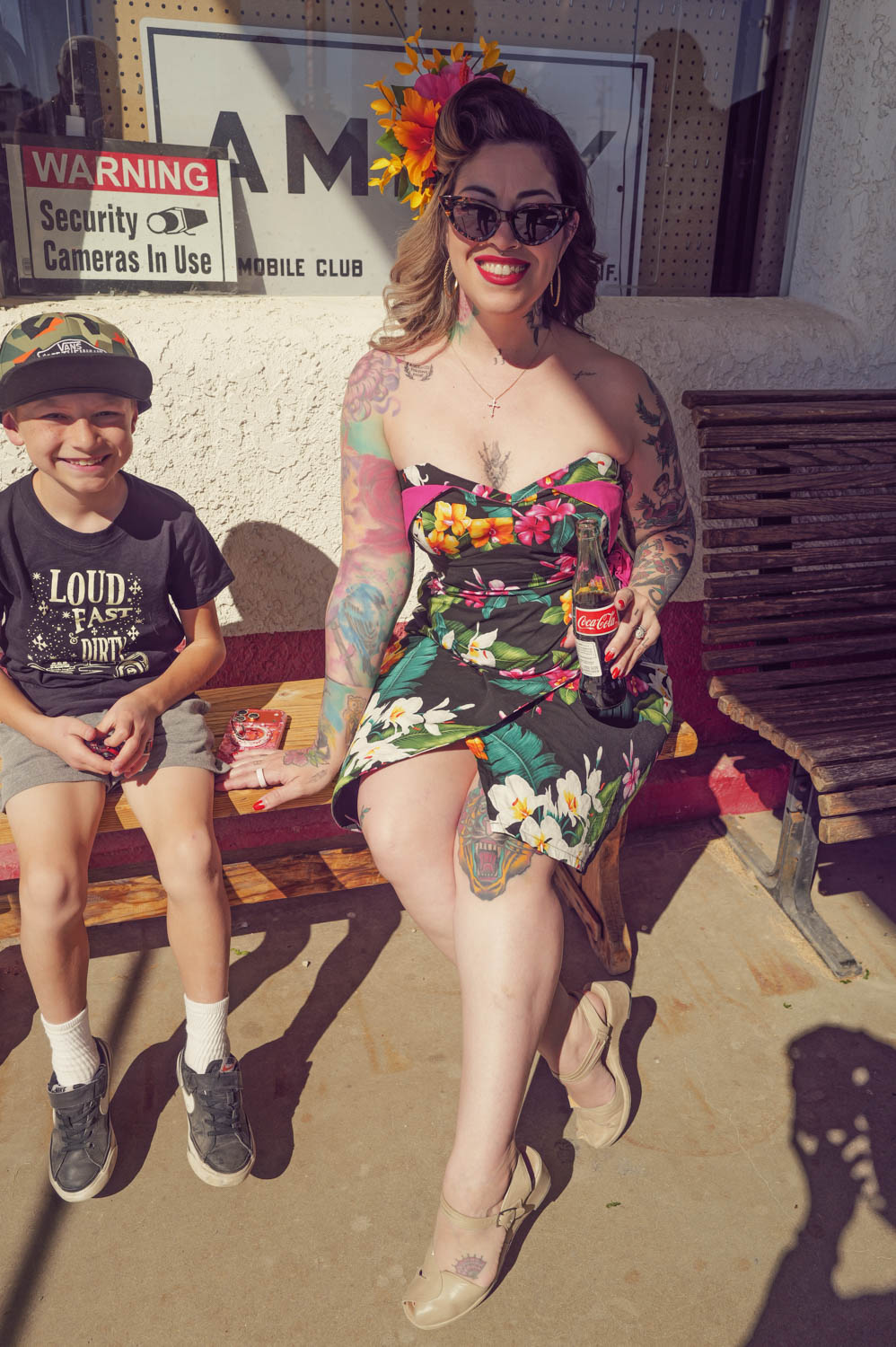
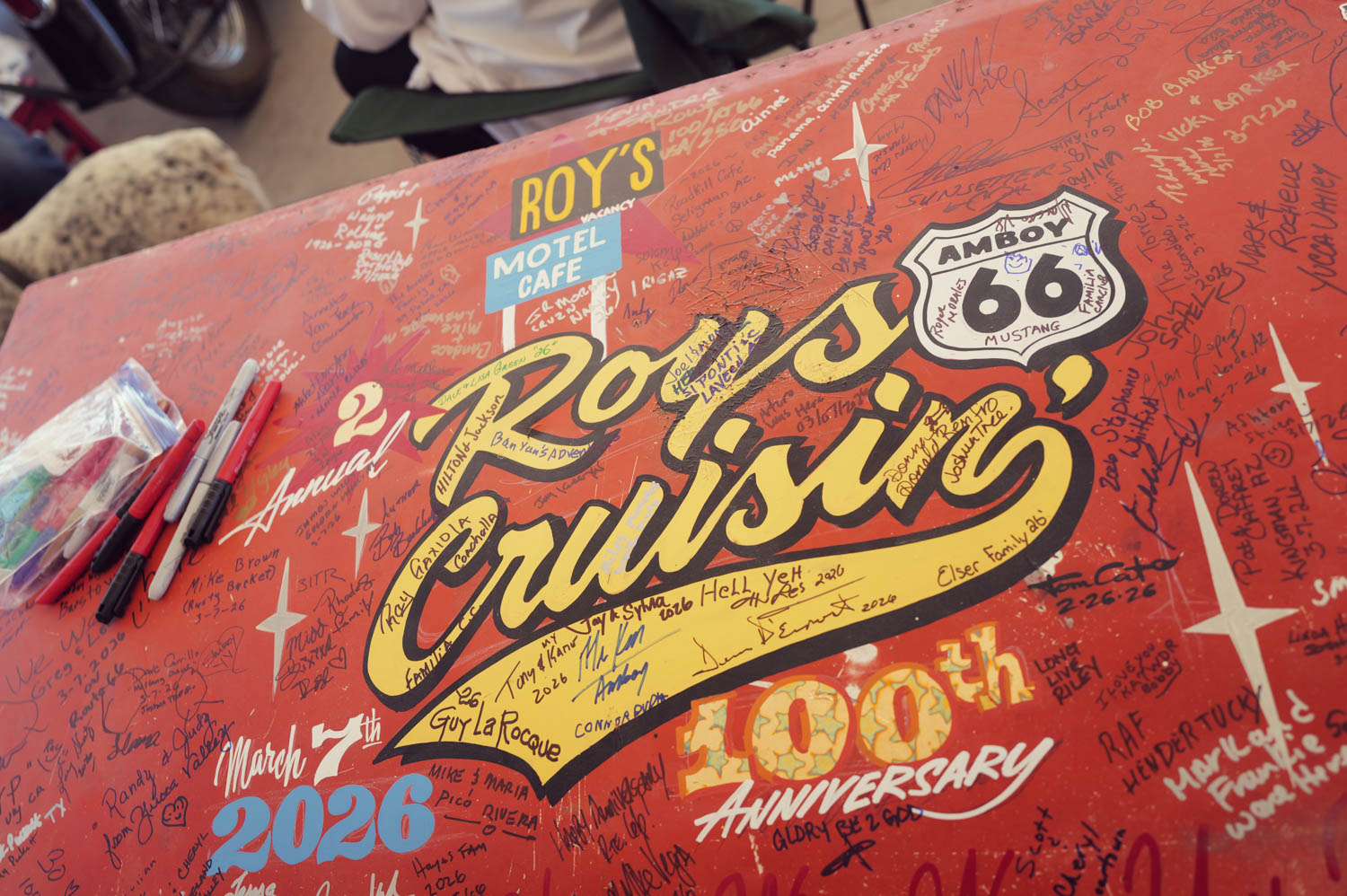
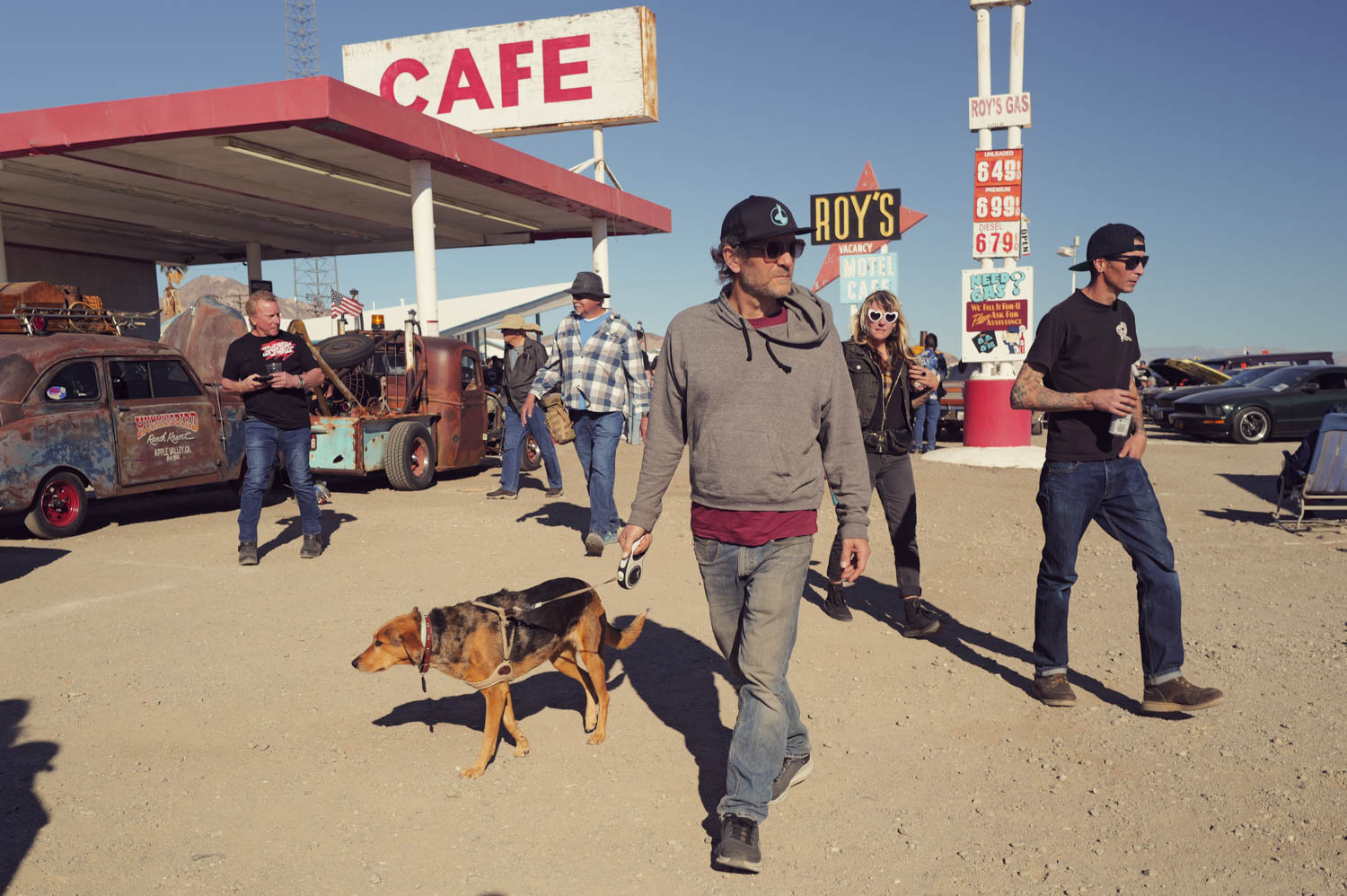
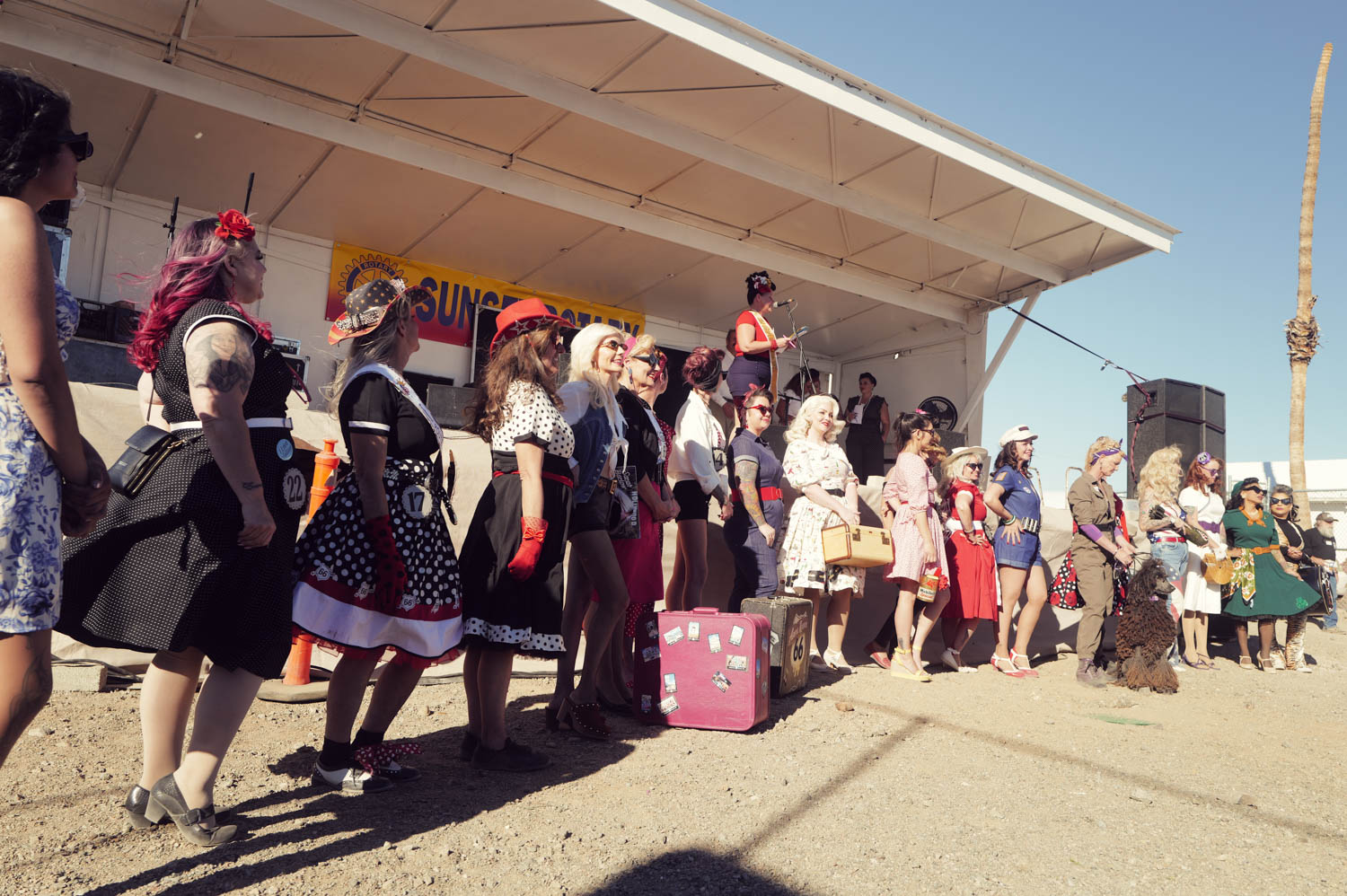
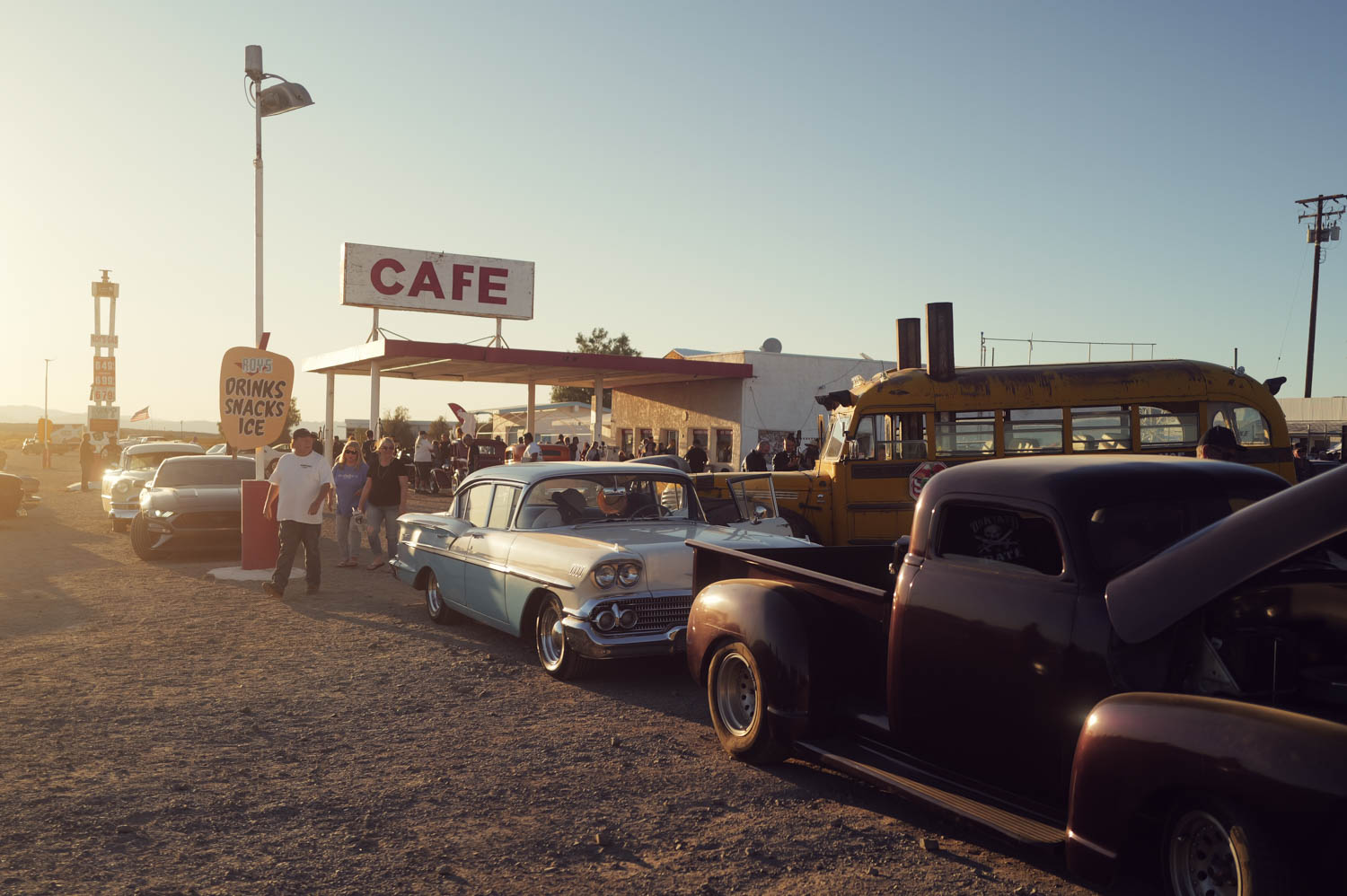
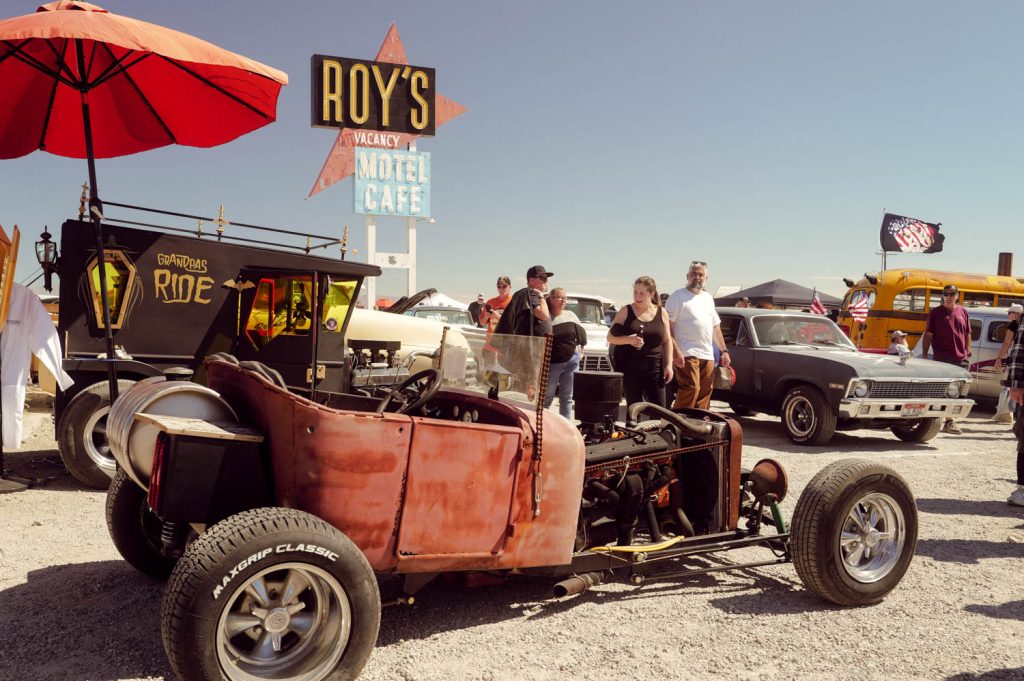
The reason for my trip was the 2nd Annual Route 66 Celebration, which brought together an impressive gathering of hot rods, classic cars, motorcycles, and custom builds spanning multiple decades of automotive history.
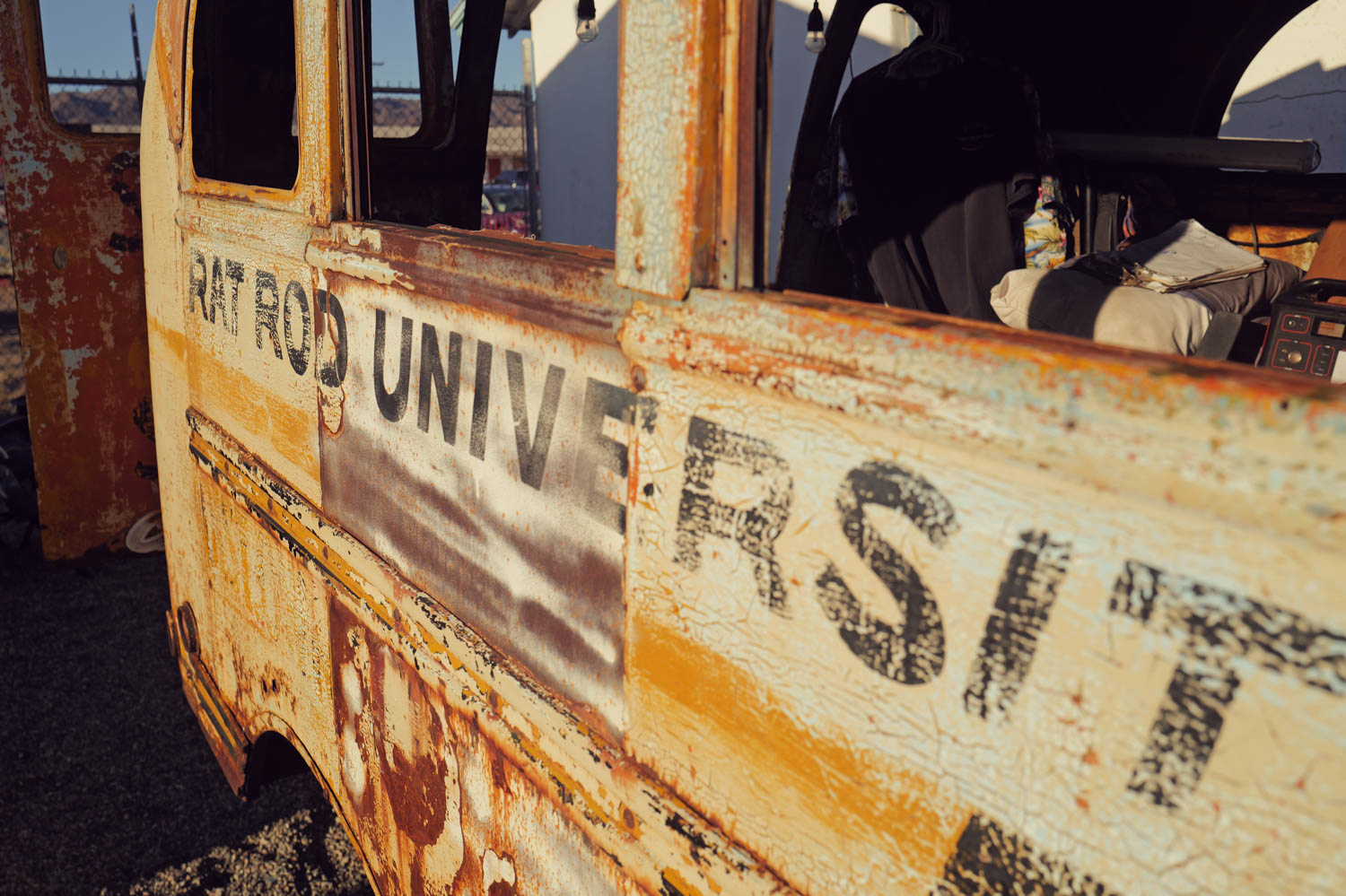
Vehicles lined the dusty desert lot—from beautifully preserved classics to heavily modified rat rods and bikes that looked like they had rolled straight out of a vintage road movie.
The event perfectly captured the spirit of Route 66.
For generations of Americans, cars represented freedom—the ability to jump in, point the wheel west, and see where the road leads.
That spirit was alive and well in Amboy that day.

I arrived around noon and the place was already buzzing. The band was playing, people who had stayed overnight were wandering the grounds, and the desert air carried the smell of food, fuel, and dust.
The wind added a little extra drama to the day—steady around 15 mph with gusts pushing close to 25 mph—but that didn’t stop anyone from enjoying the festivities.

A Photographer’s Patience: Waiting for Golden Hour
Midday desert light can be brutal for photography. The sun sits high, shadows turn harsh, and contrast becomes unforgiving.
So I made a decision early on: wait for golden hour.
As the sun began to drop toward the horizon, the desert softened. Colors warmed. Chrome reflections started to glow.
But the window was short—maybe thirty minutes of perfect light.
At the same time, many of the cars had already begun leaving, which meant fewer subjects to photograph just as the light became ideal. It turned into a balancing act: chasing the best light while racing against the disappearing crowd.
Still, the challenge made it fun.
The Importance of the Roy’s Sign
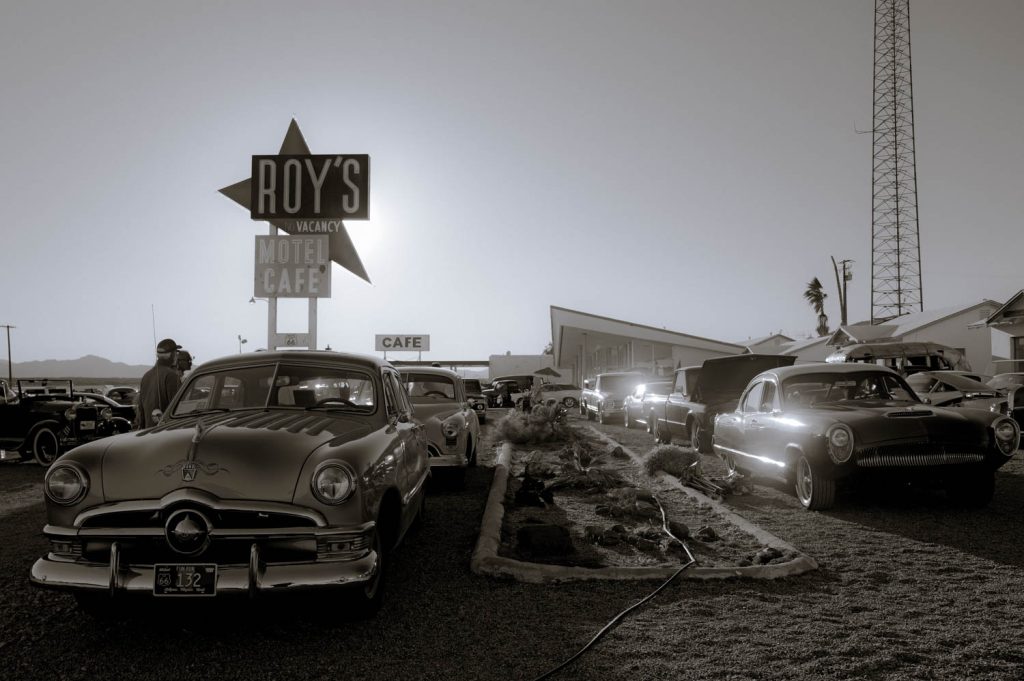
One thing I kept coming back to in my compositions was the Roy’s sign.
Out in the desert, there aren’t many obvious landmarks. Without that towering neon marker, many of the photos could have been taken almost anywhere.
But once the sign enters the frame, the location becomes unmistakable.
You instantly know where you are.
So yes, I probably framed the sign in more shots than necessary—but in a photo series like this, it anchors the story. It reminds the viewer that these cars aren’t just parked in a desert lot; they’re gathered at one of the most iconic stops along Route 66.
Gear for the Day
For this trip I brought two cameras:
- Leica Q3
- Kowa Six medium format film camera
The Kowa Six gave me a little trouble with some shutter lag and delay, which meant I had to slow down and be more deliberate with each shot.
Medium format film tends to demand patience anyway, but mechanical quirks add another layer of mindfulness to the process.
The Leica Q3, on the other hand, handled the environment like a champ—even with dust and sand blowing through the air.
I’ve been really enjoying the brass color profile coming out of this camera. It adds subtle gold tones that give the images a slightly vintage feel, which works perfectly with classic cars and Route 66 scenery.
And the resolution is honestly wild.
The fixed 28mm lens can sometimes feel wide for certain compositions, but the lens is razor sharp. Cropping into the images still leaves an incredible amount of detail—something that continues to surprise me every time I review the files.
Solo Road Trips and the Spirit of Route 66
I tried organizing a small group of photographers to come out for the event, but coordinating schedules is always tricky. In the end, I made the trip solo.
And honestly, solo road trips feel very appropriate for Route 66.
This highway has always been about personal journeys.
Even though I live only about three hours away, this was actually my first time visiting Roy’s. My interest in Route 66 really started a few years ago when I stopped in Williams, Arizona, another classic Route 66 town that has embraced its historic roots.
After this trip, I’m determined to explore even more stops along the Mother Road.
Keeping Route 66 Alive
Events like this remind me why Route 66 still matters.
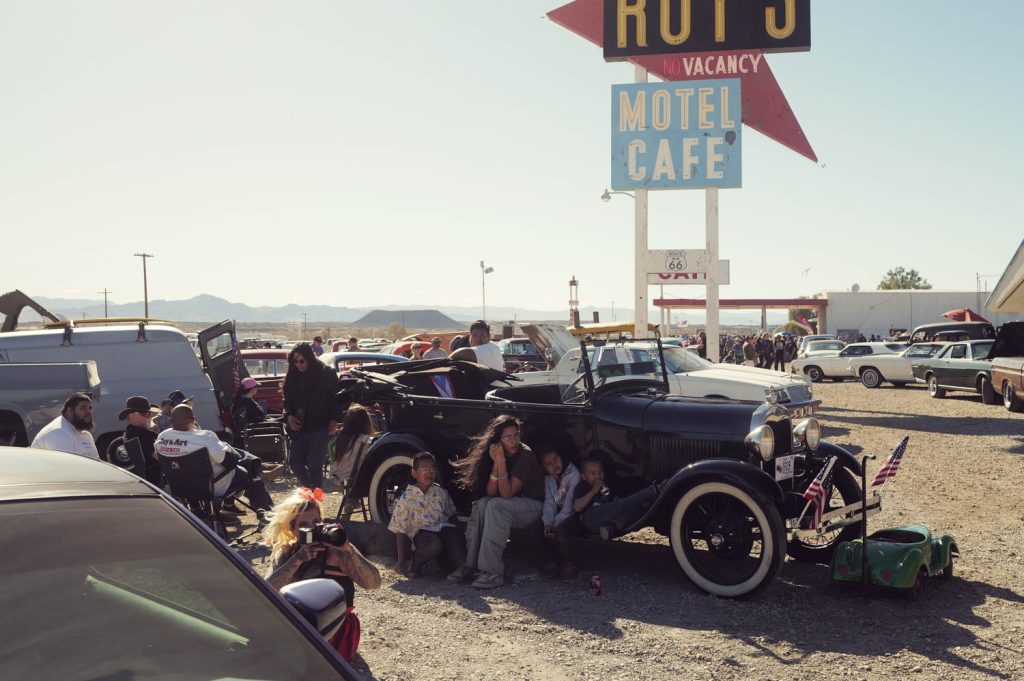
Small desert towns like Amboy rely on travelers, photographers, and road-trip adventurers to keep their stories alive. Without that attention, places like Roy’s could easily fade back into silence.
Instead, they remain living symbols of an era when the journey mattered as much as the destination.
And if the crowds at this event were any indication, a new generation is discovering the magic of the Mother Road.
I’m already looking forward to returning next year.
